
Resources

Bringing in an oilseed rape harvest - without glyphosate

Northern Ireland
Farm Practices
Glyphosate
pesticide reduction

Broighter Gold in Northern Ireland faced its first harvest season without pre-harvest glyphosate this summer. Here, Leona Kane shares how the farm adapted and how they got on.

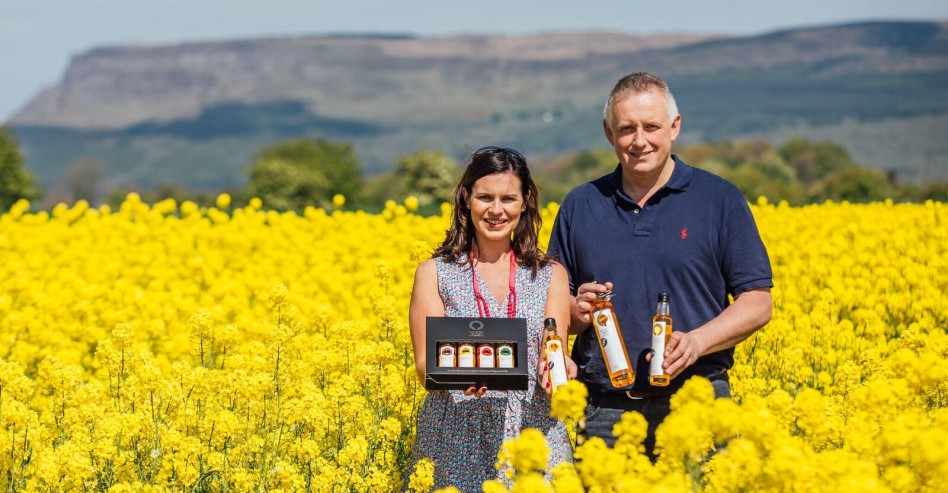
Broighter Gold is the family business of NFFN Northern Ireland farmers Richard and Leona Kane, who grow oilseed rape on their farm in Limavady, County Londonderry. We previously spoke to Leona about farming under EU pesticide regulations in Northern Ireland, including the implications of restrictions on glyphosate use. 

Following the introduction of the ban on pre-harvest glyphosate this summer, we caught up with her again to find out how the farm has adapted and brought in its 2026 oilseed rape harvest without the use of glyphosate as a pre-harvest desiccant.

How did the farm harvest its oilseed rape without glyphosate?

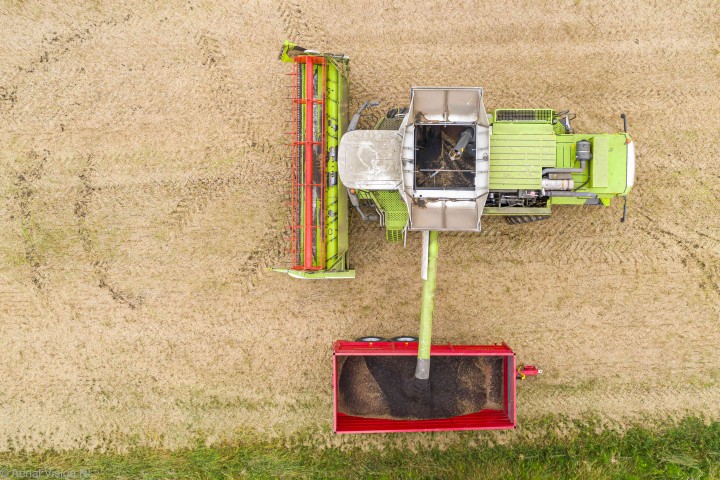
Instead of using glyphosate as a pre-harvest desiccant, Leona and the Broighter Gold team harvested the 2026 oilseed rape crop using a swather, a machine which cuts the crops and then lays it down in rows (known as swaths) to dry before harvesting.

The crop was cut when the seeds on the main raceme (a flower cluster where each flower is on an individual stalk) were changing colour. After being left to dry in the swath, it was combined using a pick-up header.

This meant more time had to be invested in monitoring the crop to identify the right time to cut, with more regular field walks to check its maturity. “Swathing isn’t difficult in principle, but the timing is everything,” Leona says.
Without glyphosate you have to make the call on when to cut, and in our climate the weather doesn’t give you much room to get that wrong. It will be interesting to see how we cope in future.

Leona Kane

Using the swather also meant learning new skills. The crop has to be cut at the right height to allow the swath to sit on the stubble, with air flowing underneath to help it dry. They then had to learn how many days the swath needed to remain in that position, and how to recognise when it was ready to be lifted. Combining using the pick-up header was also a process of trial and error, with adjustments having to be made throughout to get the system running effectively.

Richard also made changes to how the combine was used. Previously, he would wait until the whole crop was standing dead ripe in the field, whereas this year he had to plan to combine when the swaths were ready. Leona admits this was something they had worried about in advance, and they watched a lot of YouTube videos to ensure they got it right.

What challenges did they encounter?

Richard and Leona’s farm uses a comparatively old swather, as new machines are prohibitively expensive (around £200,000 for a self-contained swather and about £80,000 for a tractor-mounted one). “We had to start sorting it out for use well ahead of time, and there was a lot of tinkering required to get it working,” says Leona. “However, once Richard got it going, it ran smoothly.”

The weather also presented some challenges, both during the growing season and at harvest. “During the growing season we had two periods of drought,” Leona says. “The first affected the plants’ uptake of fertiliser, while the second brought temperatures of over 30ºC, which is unheard of here. This caused the plants to shut down more quickly and resulted in lower yields. 

“It was very warm when we started swathing, but we then had real issues with the wind moving the swaths around. We struggled to work out how long to leave them in the field before strong winds or a storm moved in. We’re right by Lough Foyle, which is very picturesque but means this is a wet and windy area.”

What were the results of harvesting without glyphosate?

Overall, the harvest yielded around 1.6 tonnes per acre, compared with around 1.75 t/acre in a typical year. However, Leona says this cannot simply be attributed to the change in glyphosate use. “Everyone’s yields have been poor this year and there are a lot of factors that could be involved, not least the weather,” she says. However, swathing did result in more seeds being left on the ground than they would have liked. This was despite having wondered before harvest whether losses might be reduced because the crop spent less time exposed to the wind.

Leona describes their first experience of a glyphosate-free harvest as “manageable”, although it did increase their costs and the amount of time required. “With glyphosate you had a wider window, and more control on when you want to harvest,” she says. “Without it you have to make the call on when to cut, and in our climate the weather doesn’t give you much room to get that wrong. It will be interesting to see how we cope in future if we have a summer which is much windier and wetter.”

Given the difficulties encountered, Leona believes farmers will need more support to transition to a future without glyphosate, especially those who are yet to commit fully to nature-friendly farming. 

“It has been a learning curve, but we always want to be outstanding in our field when it comes to innovation and doing the best for our customers,” she says. “We want to do this as  a point of principle, but I think the Government needs to support farmers who are making these major commitments with proper funding. Also, while I think this is right for our cold-pressed oils and our customers, I’m hoping this is something the general public really supports, so it doesn’t just feel like we’re making more work for ourselves.”

Cookie consent

We use cookies on this website to improve your experience, provide social media features, and analyse our traffic. By clicking Accept All, you agree to the use of cookies as outlined in our Cookie & Privacy Policy. You can manage your cookie preferences at any time by clicking Cookie Settings.