
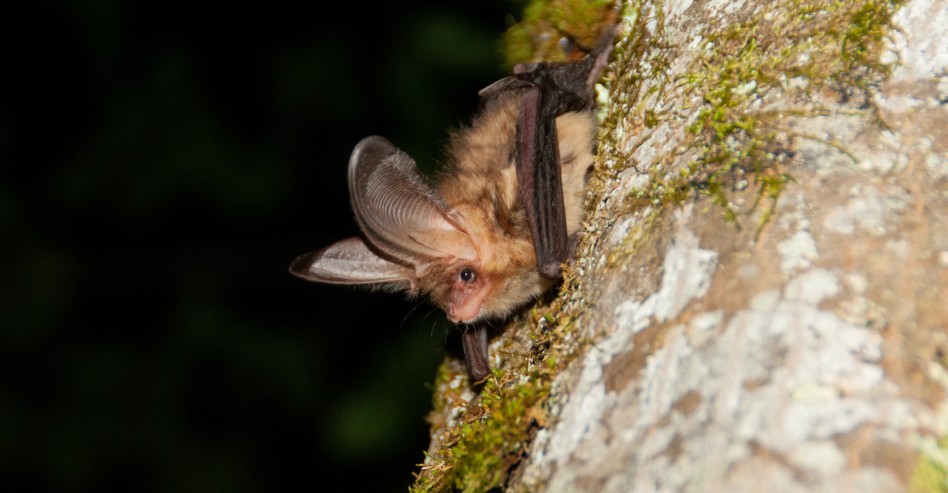
NFFN farmer Jon Thornes explores what bats reveal about insect life and landscape health, drawing on the everyday reality of farming with nature.
I was reading an article in the Spring Quarterly of the Bat Conservation Trust (Bat News), which explored what declining insect numbers mean for bats, and it echoes something many of us are beginning to sense in our own landscapes.
The research shows a clear pattern: when insect availability drops, bat activity drops. It’s been observed through both detailed fieldwork and long-term monitoring. Less insect life means less feeding, reduced activity, and potentially long-term pressure on bat populations.
But the more interesting point is this: bats don’t just reflect decline – they reveal what’s happening in real time.
They respond quickly to changes in insect abundance. When conditions are right, they are active and visible. When something is out of balance, they quietly disappear.
Why this matters for nature-friendly farming
For those of us trying to farm in a way that works with nature, one of the hardest questions is: How do we know if we’re genuinely improving the system?
We can measure soils, count plants, and track inputs – all important. But these don’t always capture how well the whole system is functioning.
For me, some of the clearest signals come from simply being present in the landscape.
I often find myself late in the evening, leaning on a gate, watching our cattle move slowly through the long grass in the fading light. Above them, bats dart and turn, feeding on the flies disturbed as the animals graze. It’s a quiet, everyday moment, but it tells you a great deal.
It tells you that:
Insects are present and active
The grazing system is creating life, not suppressing it
The food web is intact and functioning
Bats sit just above insects in that web, so they bring all of that together into something you can observe directly.
For nature-friendly farmers, bats can become a practical indicator species:
They integrate what’s happening below ground and above ground
They respond quickly to change
They reflect habitat quality, insect life, and landscape connectivity
If we see consistent bat activity, it suggests we are creating the right conditions. If activity drops off, it may be an early signal that something is out of balance – whether that’s habitat, insect life, or seasonal timing.
This isn’t about turning farms into monitoring projects. It’s about learning to read the system more closely.
Bats offer a way to do that – quietly, consistently, and without intervention.
For me, they’ve become part of how I judge whether we are moving in the right direction – not just producing food, but restoring function.
So perhaps a simple question for all of us working with nature: What are the bats telling us about our land?
The Bat Conservation Trust has its conference in Warwick on 12th and 13th September – would anyone want to join me? I’m keen not to be the only farmer there like last year.