
NFFN England chair James Robinson has put pen to paper to share his frustration at how bovine TB is dealt with. A version of this article was originally published in Farmers Guardian.
“Insanity is doing the same thing over and over again and expecting different results,” is a widely circulated quote. It is often misattributed to Albert Einstein, but likely originated in the early 1980s.
That well-used quote feels more than pertinent to our own situation with bovine TB (mycobacterium bovis) here at Strickley, as we are still stuck testing almost three years since our first ever outbreak, and still losing cattle to each skin test, despite never having the disease confirmed.
Our case is extremely complicated, and it is quite difficult to explain, but here goes.
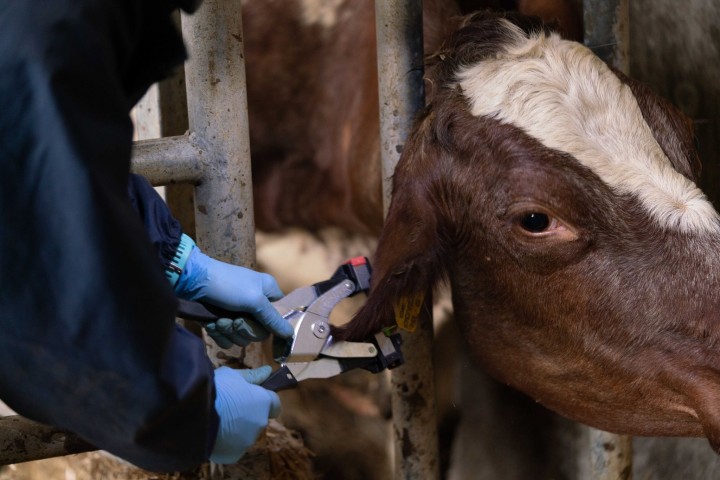
Our first breakdown was at a whole-herd skin test in November 2023. That was the first time we had ever had an inconclusive reactor (IR), never mind an actual reactor. The reactors were taken, the IRs isolated and samples taken, with no visible lesions found at post-mortem.
At that point I was convinced we must have bTB, as I had complete faith in the skin test. After all, the odds of a false positive were 5000-1. However, my faith in that skin test has diminished considerably after being caught up in what seems like an endless sequence of testing for the past three years. Over that time, we have lost 83 cows.
The majority of those cows were taken either as reactors, or double IRs, with some single IRs taken as dangerous contacts in a bid to find (or disclose) bTB. No visible lesions have ever been found; all have tested negative using the high-specificity gamma test. Since March 2024, all have been tested using a tissue sample polymerase chain reaction (PCR) test, with all animals returning negative results. All samples have been grown for cultures, with no bTB found.
So, what is happening? We have been asking that question for a long while now. We began to doubt the presence of bTB in the herd after a few short-interval tests failed to disclose the disease. And a short time later, Defra’s Animal and Plant Health Agency (APHA) suggested the same.
It seemed that our cows were most probably reacting to the skin test due to a cross-reaction from another unidentified mycobacterium. The plan was to use a policy called ‘non-specific reactor policy’ (NSR).