This necessary focus created a subtle blind spot. In strategizing our political and digital futures, we risk undervaluing our biological and economic bedrock: the integrated food system.
Brexit erected regulatory barriers, but it did not - and cannot - dissolve the biophysical interdependence of our shared geography, climate, and consumption patterns. Our food security remains both a shared vulnerability and a shared opportunity.
Every piece of fruit, every grain, every cut of meat on our plates tells a story of shared standards, cross-Channel logistics, integrated supply chains, and common environmental pressures.
Modelling the future: Youth-led cooperation in action
At the UK Youth Food & Farming Forum, we have moved from dialogue to operational collaboration. Over the past year, we have established structured knowledge exchanges with our peer youth chapters across the EU in Spain, Italy, France, and Ireland.
Our work focuses on practical sessions exploring soil health metrics, policy comparisons on agroecology and supply chain innovations. This is next-generation statecraft in practice: building the trusted networks and shared understanding today that will enable formal cooperation tomorrow. It proves that the political will for collaboration finds its most authentic expression in tackling shared, practical challenges
These dialogues are more than meetings. They are exchanges of on-the-ground realities: How are Spanish farmers adapting to drought? What does agroecology look like in practice in Italy? How are French policies shaping a new generation of producers? This is youth-led diplomacy in action, demonstrating that collaboration is a productive process.
A strategic framework for a shared food future
So, what does it mean to place food at the heart of the EU-UK strategic dialogue? It means committing to co-create environmentally protective and regenerative food systems built on three pillars.
1. Ecological resilience: Moving beyond sustainable rhetoric to actively scale agroecological practices. Our shared future depends on collaborative research and policies that restore biodiversity, regenerate soil across our shared landscapes, and secure clean water.
2. Equitable and climate-smart value chains: Building transparency from farm to fork. We must co-develop systems that decarbonise logistics, minimise waste, and ensure that economic benefits are fairly distributed to every actor in the chain, from UK fishermen to Dutch distributors to Italian growers.
3. Policy coherence for one health: Siloed policy is a threat to resilience. Our agricultural, trade, environmental and public health frameworks must be aligned. Protecting ecosystems, ensuring animal welfare and safeguarding consumer health are not separate EU or UK issues; they are interconnected priorities demanding a unified approach.
Food: The keystone of comprehensive security
As we race to address political threats, harness AI, and ensure economic security, we must recognise that these goals are not separate from our food system - they depend on it.
Food security is economic security. Stable, predictable food supplies and fair agricultural trade are the bedrock of social stability and economic planning for both blocs.
Agricultural innovation is the frontier for ethical AI. From precision farming to supply chain optimisation, how we apply technology in our fields will define our climate resilience and ethical standards.
Sustainable supply chains are the backbone of resilient trade. They offer a tangible test case for making the complex EU-UK trade relationship work for people and the planet.
Let's agree that integrating food systems into our core collaborative agenda is not a divergence. It is a strategic imperative. It provides concrete, non-ideological common ground where cooperation is both beneficial and essential for survival and prosperity.
Building the future from the ground up
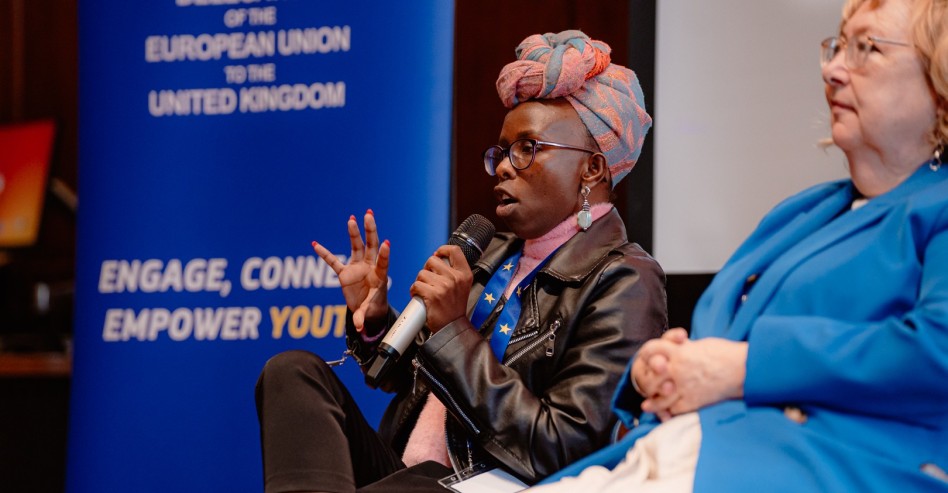
The silence that followed my question at the Youth Dialogue was more powerful than any applause. It was a moment of collective clarity. We can draft impeccable treaties and hold high-level summits, but the true strength of the EU-UK relationship will ultimately be measured by the robustness of the systems we sustain together.
Youth networks are already active, the soil is ready, and supply chains are flowing. The question is whether our political frameworks will recognise and reinforce this foundational layer of our shared future.
The dialogue continues, as it must. But let us ensure it is guided by the understanding that true partnership is built, first and foremost, on what sustains us.