
Voices from the Fields

The Rebel Farmer: What the weeds have taught me about resilience

United Kingdom
climate change
Weeds
Weather Resilience
Resillience
Land connection

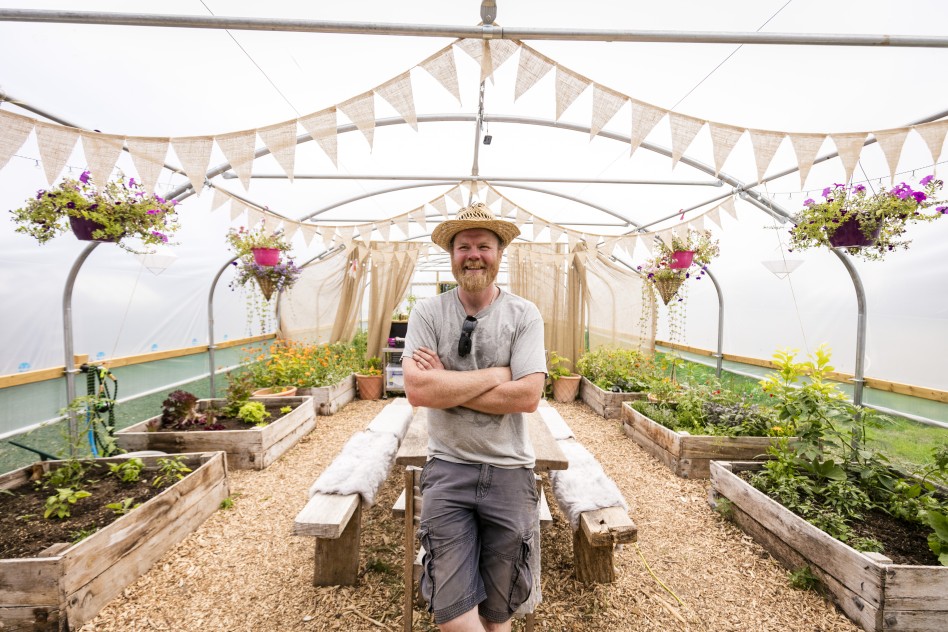
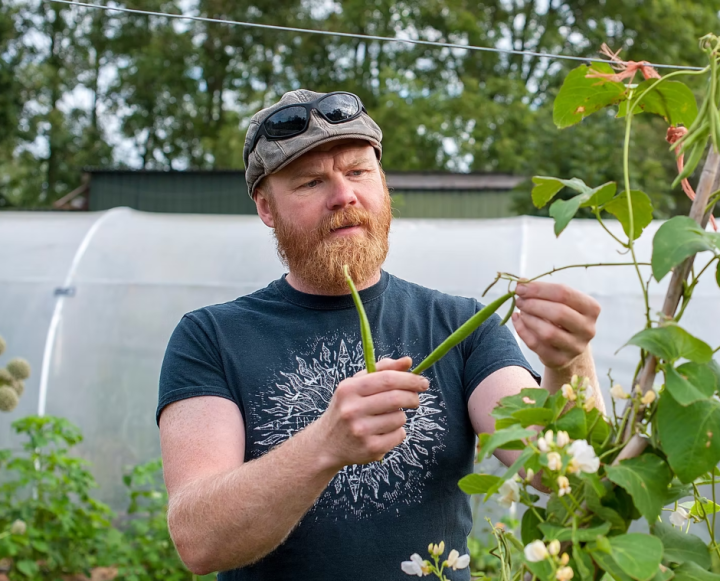
Rebel Farmer was founded by market gardener Ed Kyrke-Smith, who has spent the past decade developing a small-scale, regenerative farm in East Kent focused on growing local, seasonal food ethically and sustainably. Working with no-dig, permaculture and regenerative principles, Ed aims to reduce the environmental impact of farming while rebuilding a closer connection between humans and the landscape on which we depend. .  Here, he shares his learnings from an extreme and testing summer.

There have been moments this summer when the most sensible farming decision has been to do nothing. That's not always easy.

For much of the last decade at Rebel Farmer, my smallholding in the Kent Downs, I've been experimenting with food growing, permaculture, soil health and ways of producing food that work more closely with natural systems. Like most growers, spring usually begins with plans: seeds, beds, rotations and an expectation of what the land should produce. Then the weather intervenes.

This year's successive heatwaves and drought have made productive outdoor work extraordinarily difficult. Once the hosepipe ban arrived, I decided not to irrigate the outdoor growing areas. Some crops coped. Some struggled. Some I simply had to let go.
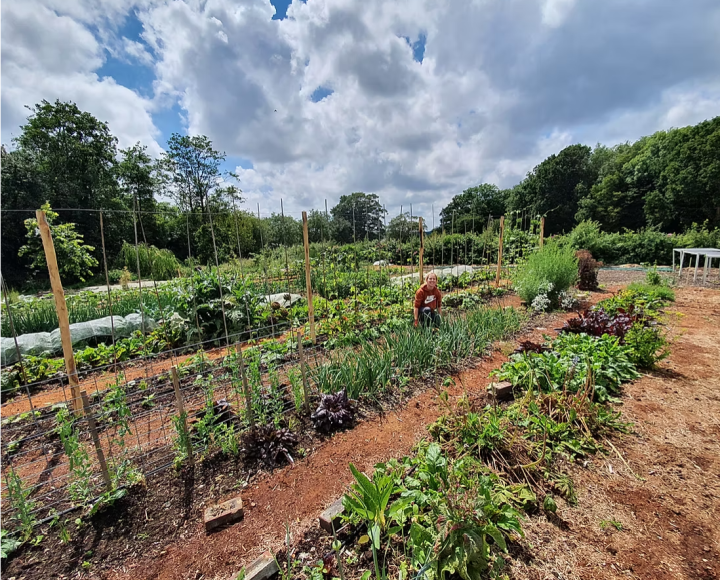
But something else became increasingly noticeable. Where grass had been cut short, the ground rapidly became brown and lifeless-looking. Inside my growing areas, things looked very different. They weren't necessarily tidy - quite the opposite - but they remained green, diverse and alive.

A large part of that came down to weeds.

I've increasingly stopped thinking of weeds simply as competitors to my crops. When vegetation needs controlling, I'll often cut it and leave it exactly where it grew. It becomes mulch, shading the soil from intense sunlight, reducing evaporation and returning organic matter to the ground.

Underneath that layer is another farm altogether: fungi, bacteria, worms, insects and countless other organisms involved in building and cycling the fertility on which everything above ground ultimately depends.

And above it, flowering plants that might once have been removed as weeds become food and habitat for insects trying to survive the same difficult summer. It has made me question what we mean by a "productive" landscape.

If we judge productivity only by the crop we intended to harvest, this year has been disappointing in places. But if productivity also means photosynthesis, water retention, soil formation, habitat, pollination, carbon cycling and resilience, the picture becomes much more interesting.

My plot has become something of a refuge: messy, green and buzzing with whatever life has been able to persist through the heat. And strangely, what has been happening on those few acres reflects a much bigger transition in my own life.

Only a few years ago, much of my working week involved growing food and facilitating volunteers. I still grow and remain deeply connected to practical work on the land, but increasingly my attention has moved outwards.

I've trained in nature-based practice, become a North Downs Ambassador, worked on projects reconnecting people with the River Stour, and become increasingly interested in the economics and governance needed to restore landscapes rather than individual fields.

That journey has now led me to become a director of Bioregion East Kent CIC.

Regeneration isn't something we can impose upon a landscape. Sometimes that means planting and harvesting. Sometimes it means collaborating with communities across an entire watershed. And sometimes it means resisting the urge to tidy everything up.

Bioregioning asks a deceptively simple question: what would it mean to organise more of our lives around the actual living landscape we inhabit - its soils, rivers, watersheds, food systems, communities and ecological limits - rather than treating each of them as separate problems? I increasingly think my little growing plot is teaching me something about that larger challenge.

Regeneration isn't something we can impose upon a landscape. We can create conditions that allow life to regenerate itself. Sometimes that means planting and harvesting. Sometimes it means collaborating with neighbours, farmers and communities across an entire watershed. And sometimes it means resisting the urge to tidy everything up and recognising that the inconvenient plant growing between two vegetables might actually be doing some useful work.

This summer has involved letting go of quite a lot - crops, expectations and perhaps some old ideas about what productive farming looks like. But what remains feels increasingly important: living soil, covered ground, diversity, relationships and the capacity of a place to respond to change.

Perhaps resilience begins there.

Reach Ed and find out more about his work at www.rebelfarmer.co.uk.

Green bean photo: Erdal Redjep

Other photos: The Rebel Farmer

Cookie consent

We use cookies on this website to improve your experience, provide social media features, and analyse our traffic. By clicking Accept All, you agree to the use of cookies as outlined in our Cookie & Privacy Policy. You can manage your cookie preferences at any time by clicking Cookie Settings.