
Voices from the Fields

Do agricultural colleges teach enough about nature-friendly farming?

United Kingdom
nature-friendly farming

We consider if the next generation of farmers are being sufficiently taught about regenerative approaches.

Agricultural colleges have a crucial role to play in giving the next generations of farmers the skills they need to embark on careers in the industry.

But with a major agricultural transition underway, and farming needing to change radically in response to the climate and nature crises, are these institutions keeping up?

Two NFFN farmers share their thoughts on whether colleges have sufficiently embedded nature-friendly farming in the curriculum.

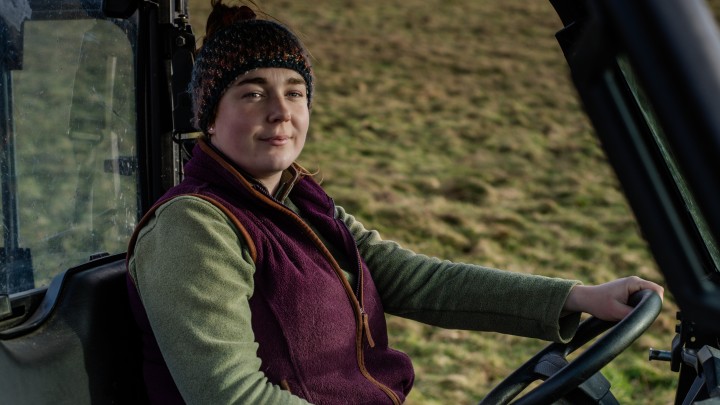
Elise Sutton - Cherry Lodge Farm, Wiltshire

I thoroughly enjoyed my time at agricultural college, though I studied countryside management, which, on reflection, gave me a different outlook on looking after the land. My course taught me about various types of habitat management, plant and soil science, and practical rural skills such as coppicing, hedgelaying and dry stone walling.

One of the reasons I got into farming was a module in my second year called ‘Livestock in Conservation Use’, where we dived into the technicalities of managing habitats and species with different varieties of livestock, comparing the grazing techniques of cattle versus ponies, or understanding the wider ecosystem processes involved in introducing large grazing animals into landscapes. 

I found this incredibly interesting as it was something that hadn’t really occurred to me as a young conservationist. I had the opportunity to work for a local grazier during the summer, managing his herd of Red Ruby Devons on a heathland site. I then knew that was what I wanted a career in!
While I was doing this, students on the agricultural courses were learning conventional farming, with no mention of ‘nature-friendly’ approaches. The focus was on intensive systems, chemicals and poor pasture management. Anything to do with nature was left to the countryside students. Having looked at the college website for the course modules, there is nothing on organic, regenerative or sustainable agriculture. Colleges have the option of choosing modules to teach, so why are modules like organic production or farm habitat management not being selected?

Many of the skills and knowledge I have learnt around organic, regenerative and progressive farming have come from actively farming, not from an educational setting. I believe the next generation would be in a better position for their careers if elements of nature-friendly farming were incorporated into the curriculum.

Since leaving college 10 years ago, I have been back several times to lecture to countryside students and have even hosted them on the farm to learn about conservation grazing and regenerative agriculture. Encouragingly, this was something the lecturers pushed for, as they wanted to ensure their students had a broad understanding of how farming with nature can be done. Going back to speak to students was an enriching and inspiring experience.

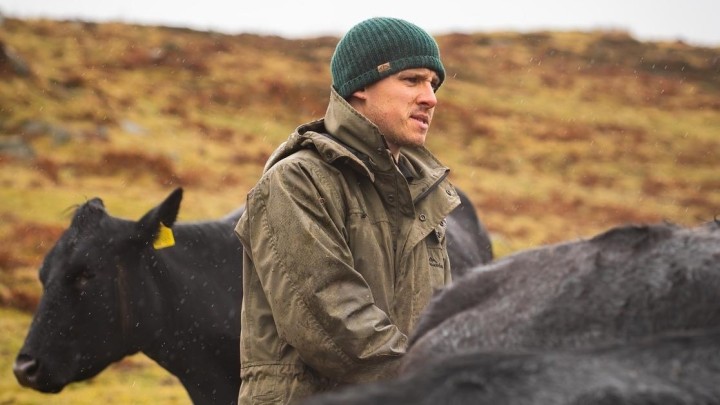
Jamie Jack -  Sheep farmer and Scotland Regional Manager, Pasture for Life

I think we’re at a bit of a crossroads when it comes to agricultural education, just as we are on our farms and crofts. There’s definitely an appetite for change, but from what I’ve experienced, the system still feels underpinned by reductionist and siloed thinking that separates production cycles from nature, as if they can’t possibly be reliant on each other.

That disconnect really shows up in the practical side of things. When I was a student, I was taught to see the burn running through a field as something separate - managed by someone else, regulated by another body. There wasn’t much sense of a whole system at play. The same went for inputs: we were taught that a significant chunk of fertiliser application was there to account for nutrient loss, without really being asked to consider where those lost nutrients ended up, or what effect that had downstream. Even now, engagement with regenerative approaches can feel more like a box-ticking exercise than a genuine shift in mindset.

Through my work with Pasture for Life, I’ve had the chance to spend time with farmers doing things differently; working with grazing systems that prioritise soil health, biodiversity and animal welfare as part of one connected system. What stands out isn’t just the practices themselves, but the mindset behind them. It’s not about following a prescription; it’s about observation, adaptation, and a willingness to rethink and interrogate our assumptions. That way of thinking still feels largely missing from formal education.

But this isn’t about swapping one system for another blindly and calling it progress. Farming - especially regenerative or nature-friendly farming - isn’t a fixed destination. It’s a process, and often a messy one. If we’re serious about food security and climate resilience, we need to support a generation of farmers who have the confidence  to question what they’ve been taught, and who have the skills to operate amidst the uncertainty that comes with doing things differently.

That’s where the real opportunity lies. We’ve got a chance to rethink what agricultural education could look like in Scotland - not just tweaking the edges, but properly opening it up. That might mean giving lecturers more freedom to explore whole-system thinking, bringing together livestock, crops, soil, people and landscape as interconnected parts of the same story, rather than isolated modules of a curriculum.

It might mean placing students in a wider range of real-world systems, where mistakes aren’t failures but valuable feedback mechanisms contributing to broader contextual understanding. And it definitely means breaking down the silos that stop people from thinking critically about how it all fits together.

If we can get to a place where questioning the status quo isn’t just accepted but actively encouraged, then we’ll be on the right track. Because in the end, that’s exactly what farming in a changing climate is going to demand of us.

Cookie consent

We use cookies on this website to improve your experience, provide social media features, and analyse our traffic. By clicking Accept All, you agree to the use of cookies as outlined in our Cookie & Privacy Policy. You can manage your cookie preferences at any time by clicking Cookie Settings.