
Voices from the Fields

Climate push-back and the agency of nature-friendly farmers

United Kingdom
carbon capture

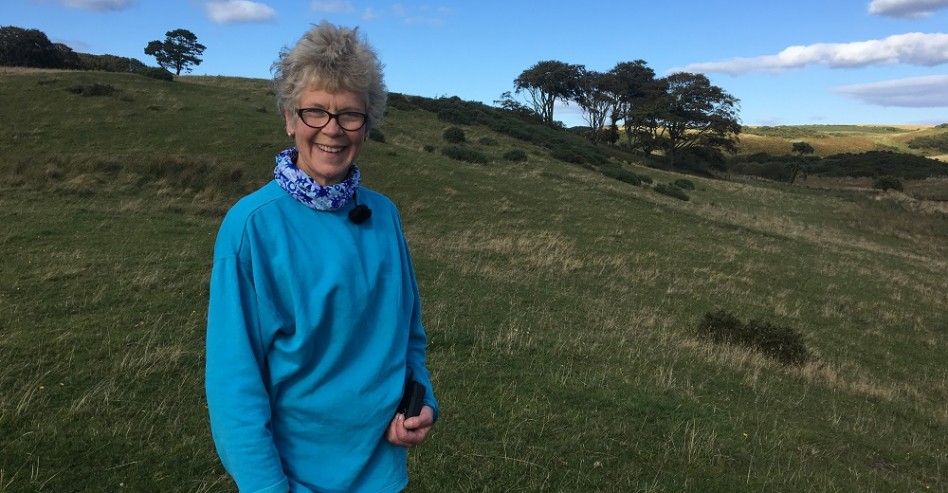
Given the urgent focus of the NFFN and many other organisations on addressing the impacts of climate change and preventing further harm, it is concerning to see growing pushback in other parts of industry against the need for climate action. Denise Walton, vice chair of the NFFN board and chair of NFFN Scotland, discusses the forces at play.

Farming with nature offers extraordinary agency to counter the impacts of climate disruption. But let’s be real, too, about the challenging context of entrenched mindsets and interests, epitomised by the outcome of COP30 and the media silence following the recently held National Emergency Briefing on Climate.

The evidence is copious and growing, the science is unequivocal. To manage even moderate control of our disrupted climate, there have to be the following mutually reinforcing actions: the immediate reduction in fossil fuel use and emissions, the sequestration of carbon into natural carbon sinks and finally, planet cooling.

It’s not so much that climate science is being challenged; it’s simply being ignored and posited that, in any event, the solution is industrial.  This all speaks of ‘Big Industry’.  Big Industry’s solution to our changing climate is more ‘Big Industry’ (in order to maintain the status quo).  All well and good, but not while it has an umbilical dependence on fossil fuels and their polluting, ecologically degrading, climate-warming emissions. 

The fossil fuel industry is nonetheless challenged; there were 1,600 lobbyists at COP30 (the greatest number ever).  Darkly ironic, isn’t it, that they even managed to get those words ‘fossil fuels’ removed from the COP30 agreements? Unsurprising, too, that COP30 had the largest attendance of agricultural industry lobbyists ever.  Maybe they are feeling the pressure too? 
It’s not so much that climate science is being challenged; it’s simply being ignored and posited that, in any event, the solution is industrial.  This all speaks of ‘Big Industry’.

Denise Walton

What of the ‘big influencers’?  

The Tony Blair Institute says carbon capture is a key solution – but we know it’s unproven and would arguably maintain the status quo for ‘big industry’ and require ‘big industry, energy-hungry’ infrastructure.  Bill Gates says we should deal with human suffering as a priority, though much of humanity’s suffering is due to the impacts of climate breakdown, in particular resulting in forced migration. He also believes the solution is industrial and hi-tech (i.e. ‘energy-hungry, big industry’ - again!). 

As for the biggest influencers of all, the financial and insurance sectors, they continue to dangerously downplay the risks of climate catastrophe based on the work of economist William Nordhaus (Nobel Laureate). His economic modelling concludes that because most ‘work’ and ‘workers’ are indoors (or underground), the impact of climate disruption would be relatively minor, only affecting global GDP by 2% at 3 degrees Celsius of warming. This is  at complete odds with the science.  Although his work has been disproven and rejected as ‘scientifically illiterate’, it continues to form Government policies, arguably giving policymakers the justification to ignore the science and maintain the status quo.

Recent public surveys demonstrate that most Britons believe in the human causes of climate change and are worried about its impacts and that our respective governments are not doing enough about it.  Why aren’t our governments doing more when they see the clear evidence?  Well, that has a great deal to do with the unscrutinised and excessive access the fossil fuels and ancillary industries have to our politicians and our weak lobbying laws. A subject for another time!

Where does this put our farming?   What can we do as an industry in spite of poor policy leadership and obscure market signals?  The commodity market is dictated by extreme volatility, and the ‘public goods market’, while evidently desired by the public, is skewed by politics and big business.

Farming here in the UK and globally can implement those mutually reinforcing actions listed at the beginning of this article; i.e. the immediate reduction in fossil fuel use and emissions, carbon sequestration into natural carbon sinks, and cooling. 

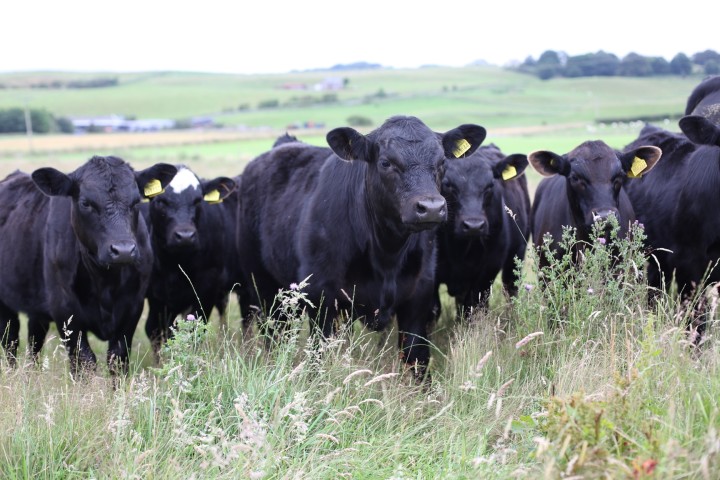
Our agency lies in the soils of our farms. Healthy functioning soils are vital to our life-supporting climate. Approximately 44% of the Earth’s surface is farmed. Some two-thirds of which are permanent grassland (FAO statistics).  With this level of access and control over soil and grassland, we have the basis of global-scale solutions to this global issue.  

Grass and other green vegetation are global coolants.  As ‘evapo-transpirators,’ they reduce ground-surface temperatures.  Grassland is emerging as crucial in managing global climate change. Some scientific modelling suggests that on a European scale, cooling from perennial grassland could counteract 50% of future warming, with an effect potentially three times greater than carbon emissions reductions. Together with soils, farming too has significant agency with the growth and management of green vegetation, in particular grass.

Recent modelling of soil carbon sequestration at UK-wide scale by the University of Lancaster (the first of its kind), concludes that our soils can continue to be net sequesters of carbon if we remain below 2 degrees Celsius of warming and with increased grassland restoration.

Nature-friendly farming, pump-priming biodiversity with reductions in agri-chemical use, extensive hedgerow and other agroforestry creation and species-rich grassland restoration,  are powerful pointers to what is achievable on our farms.  

We can make decisions in spite of politics and market signals.  We can persuade politicians and the market that with their support, we can make essential headway in restoring nature as the fundamental basis to ‘climate calming’.  To achieve global-scale change, this needs global-scale political, business and market support. ‘Team Humanity’ achieved something not dissimilar only five years ago (remember 2020 and Covid?).

With the growing evidence, soils have rapidly climbed up the scientific agenda - though sluggishly up the political agenda.  There are initiatives such as the UNFCC  ‘4 in 1000’, an initiative of COP21 (2015): the small incremental increase of 0.04% soil organic matter in our soils, which focused solutions on regenerative farming. Recently, the ‘Global Cooling Pledge’ launched at COP28 and expanded at COP30 has an urban focus on the rocketing energy demands of cooling systems in built-up areas (another indicator of the extraordinary disconnect with reality of William Nordhaus, who set such a dangerous precedent for tackling the existential issue of climate change back in 2018!).

Healthy functioning soils are vital to our life-supporting climate. Approximately 44% of the Earth’s surface is farmed. With this level of access and control over soil and grassland, we have the basis of global-scale solutions to this global issue. 

Denise Walton

None of this will be effective unless we drastically reduce fossil fuel use and cut emissions globally as the first and highest priority. Science advises us that our best efforts will fail to achieve these essential outcomes unless we can keep global warming below 2 degrees Celsius.  The more dysfunctional our climate becomes, the more all the natural processes that have maintained our biosphere for millennia - not least the soil’s ability to sequester carbon - will weaken.

For most of us farmers concerned about the ability to produce food for our communities, there is increasing evidence from a diversity of respected sources that an agroecological farming system can produce sufficient food on both a UK and European scale. It will inevitably require change.   

For all of us without exception, however, this reminder: 

“While soil is a potentially powerful ally for climate mitigation and adaptation, nothing can replace rapid cuts to fossil fuel emissions” (Professor Julia Davies, Chair Professor of Sustainability, Soil Carbon Scientist, University of Lancaster).

Cookie consent

We use cookies on this website to improve your experience, provide social media features, and analyse our traffic. By clicking Accept All, you agree to the use of cookies as outlined in our Cookie & Privacy Policy. You can manage your cookie preferences at any time by clicking Cookie Settings.