
Voices from the Fields

All aboard The Nutfield Express - Running a farm shop from a milk float

England
Dairy
direct selling

Images: Andrew James, Countryside Regeneration Trust, and Joanne Coates

NFFN farmer Matt Elphick explains how he transformed an old electric vehicle into a quirky outlet for his dairy produce - and the effect it has had on his farm.

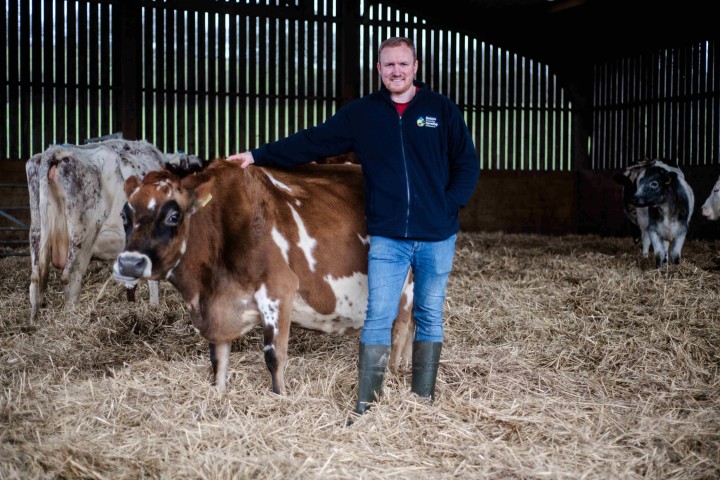
Like many small-scale farms and producers, diversification and direct sales were the only way we were ever going to create a successful farming business. The way in which we do that has changed and evolved over the years in response to different challenges. My partner Betsie and I are tenant farmers of the Countryside Regeneration Trust. On our 52-acre Surrey farm we milk around 25 Dairy Shorthorn and Guernsey cows. We also have a flock of 80 laying hens and have recently ventured into rearing pigs.

With many years’ experience in the conventional dairy industry, I wanted to create something different, or at least more unusual: a small, nature-friendly dairy with the cows predominantly grass-fed, milked once per day and rearing their own calves. Farming in this way, at this scale, was never going to be economically sustainable if we sold our milk to a dairy processor. Our plan was always to process and sell all of our milk directly to the end consumer to maximise value and be in control of its price point.

Our main challenge with selling direct is farm access. Unfortunately, our non-farming neighbours own the farm's driveway, which limits what we are able to do. So, in 2020 when we started Nutfield Dairy, we bought an old electric milk float to deliver our milk to our customers’ doorsteps. If people couldn’t come and buy milk from us, we would take it to them. 
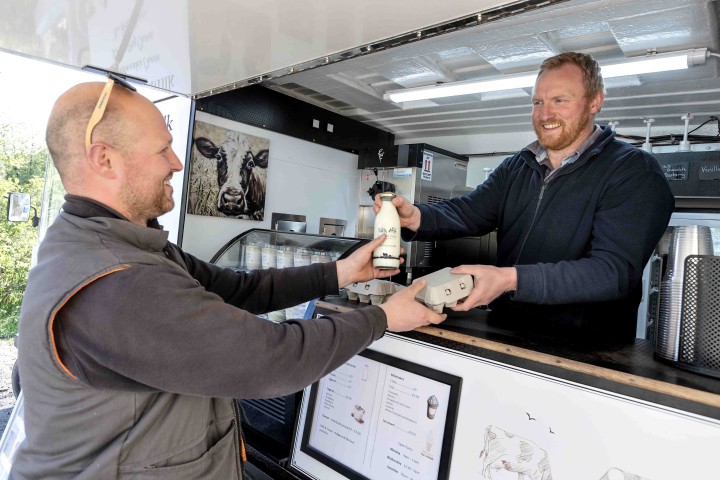
This worked well for a couple of years and was well received locally. However, it was also very labour-intensive and the margins were still too tight. We decided to move away from selling liquid milk and instead made cheese and yoghurt, which we sold at farmers' markets as well as supplying local farm shops. 

This reduced the pressure we were under and allowed us to focus much more on farm management. We improved our grazing platform with a 30-day paddock rotation and perfected how we manage the calves at foot. But farm viability still wasn’t where it needed to be. Cheese sales could be fairly seasonal and we missed the regular cash flow that selling milk gave us. Our old customers also missed being able to purchase our fresh unhomogenised milk in glass bottles. 

Farming on our small scale, coupled with our regenerative, nature-friendly management, does limit the volume we can produce. We don’t use any synthetic fertiliser and the bulk of our cows’ diet is grass, so our costs per litre are reasonably low. However, so is our yield. It became clear we needed to find a way to easily and efficiently maximise sales and achieve a regular income while promoting our method of farming. 

Our farm focuses on holistic, regenerative food production as well as promoting the benefits of our approach for nature, biodiversity recovery, soil health, food quality and carbon sequestration. For a small mixed farm like ours to provide our sole income, we need to be able to sell directly.

Matt Elphick

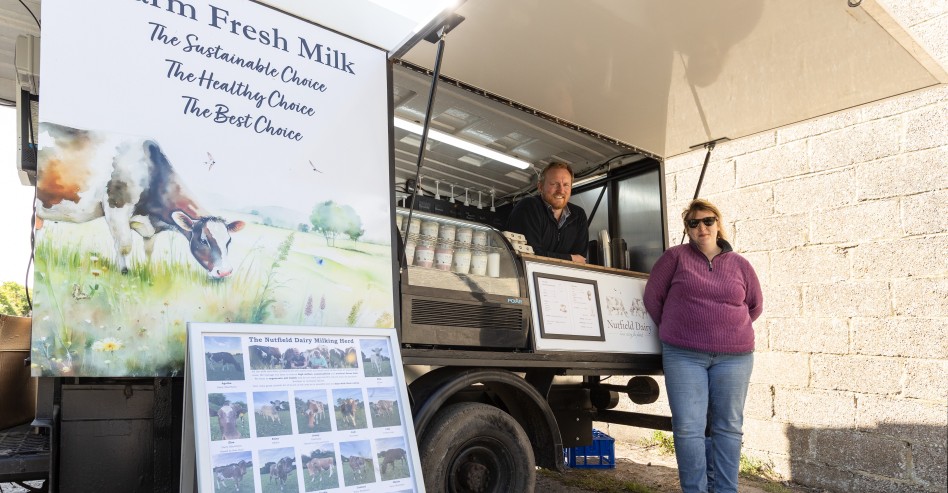
A vending machine or some kind of milk dispenser was one solution, but we couldn’t have it on site or as part of a lovely little farm shop, as others can. We would have to go mobile again. The old milk float had been sitting in the barn gathering dust for over two years when the idea came to me one day. Could we turn the milk float into a mobile farm shop? We could drop the floor so I could stand in the back, install milk dispensers so I could refill customers' glass bottles, and have a display fridge to sell our cheese, yoghurt and other products. It felt like a brilliant solution. 

Just looking at the float, I could see converting it wouldn’t be easy. But I knew it could look great and would stand out, while giving a quirky twist to its existing associations with milk. The other advantage was that we already had it, and when you’re farming without capital, making use of what you have becomes second nature. 

However, we were still looking at a considerable investment, and funding was needed. Thankfully, fortune favoured us on two counts. Firstly, we were awarded 80% funding through the Rural Prosperity Grant through our council, which was pleased to support sustainable dairy farming. Secondly, we set up a crowdfunding page for public donations in return for different rewards.

We began the conversion work at the farm. We replaced the old batteries, lowered the floor and built a frame. The float was then sent down to Somerset to the Milk Station Company, where they fitted a 400-litre milk dispenser, display fridges and a serving counter. There were plenty of challenges along the way, not least fitting everything in and ensuring there was enough power. This was all successfully overcome, and the float was delivered back to us in March 2025.

We could now sell whole and semi-skimmed milk as well as all our other dairy produce. I had been speaking with our neighbouring farmer whose yard is right on the roadside and overlooks our farm. He agreed to me parking there three times a week, and in May 2025 we launched The Nutfield Express. 

I’m pleased to say this has been the turning point for our business. We have lots of regular, loyal customers and continue to attract new ones. Being mobile, we don’t have to solely rely on people coming to us to fill their milk bottles or buy cheese, as I also drive to local markets and events. We have recently started making our own ice cream, which is sold through a soft–serve machine. Our main problem now is that we need more customer car parking spaces.

Our farm focuses on holistic, regenerative food production as well as promoting the benefits of our approach for nature, biodiversity recovery, soil health, food quality and carbon sequestration. For a small mixed farm like ours to provide our sole income, we need to be able to sell directly. Our cows give about a quarter of the milk of an intensively-managed Holstein. But pushing for productivity or specialising in one type of food isn’t our aim. The float now enables us to diversify further, into laying hens and products from our pigs. I’d also like to have meat chickens and a market garden.

It’s not easy, and it has been a lot of work, but our mobile milk float shop is enabling us to run a viable business while farming at this scale.

Cookie consent

We use cookies on this website to improve your experience, provide social media features, and analyse our traffic. By clicking Accept All, you agree to the use of cookies as outlined in our Cookie & Privacy Policy. You can manage your cookie preferences at any time by clicking Cookie Settings.