
Resources

Why direct selling works well for nature-friendly farmers

United Kingdom
Farm Practices
community-supported agriculture
direct selling
Diversification
food system
Educating the public

Whether it’s running a farm shop, a veg box scheme or using online retail, connecting with customers can pay off for NFFN members.

For Nature Friendly Farming Week 2026, we’re highlighting the value of a more direct relationship between farmers and the people who buy their food. Selling directly helps farmers of all kinds retain more of the value of what they produce, build resilient businesses, and connect people more closely to where their food comes from. 

To bring this to life, we’re encouraging everyone to seek out their local independent farm shop and buy something directly from the people who produced it (or support them on social media if you live too far away).

NFFN farmers are finding a range of ways to bypass supermarkets and the conventional supply chains. Farm shops, online retail, subscription models… - these approaches offer greater transparency, fairer returns and the chance to tell the story behind the food.

We spoke to three NFFN farmers about how they sell directly to the public and why these models are helping to sustain both their businesses and their environmental approach.

Tom Edmondson - Cranley Barn Farms, near Milton Keynes

Tom opened an on-site shop to serve his mixed farm around seven years ago. It sells the farm’s beef, pork, lamb, honey, vegetables and salad along with freshly made products like sourdough bread and sausage rolls. It also stocks a small number of products from like-minded businesses, such as Hodmedods, reflecting its commitment to British farming.

For Tom, having people who think about food and farming in similar ways visit the shop is an important validation of his decision to move away from conventional approaches towards a more nature-friendly, regenerative system.

“Being directly connected to consumers makes you realise what people actually want,” Tom says. “When they come to the farm and shop, they can see the positive impact we are having on nature. They want to engage with our nature-friendly approach and they relish the transparency of seeing where their food comes from.  
Being directly connected to consumers makes you realise what people actually want. They want to engage with our nature-friendly approach and they relish the transparency of seeing where their food comes from

Tom Edmondson

“It can be very easy to think that everyone just wants cheap protein from white meat, when we know that is a key driver of environmental damage and nature’s decline, especially in river catchments. Many of our customers are on that journey of choosing to eat less but better-quality meat, and that’s important for their own piece of mind. They want to know they’re eating food that benefits the environment, is produced in a way that supports healthier soil and animals, and is nutrient-dense.”

Tom says stocking his farm’s produce also leads to interesting conversations with shop customers about the availability of food, particularly meat. “When you go to the supermarket you can buy whatever cut of meat you want whenever you want. We take a nose-to-tail approach, so we’re selling more unusual cuts and things that would otherwise go for mince, and not everything is available every week. We’ve even found that there’s a huge demand for offal in our local area.”

Jon Thornes - South Ormsby Estate, Lincolnshire

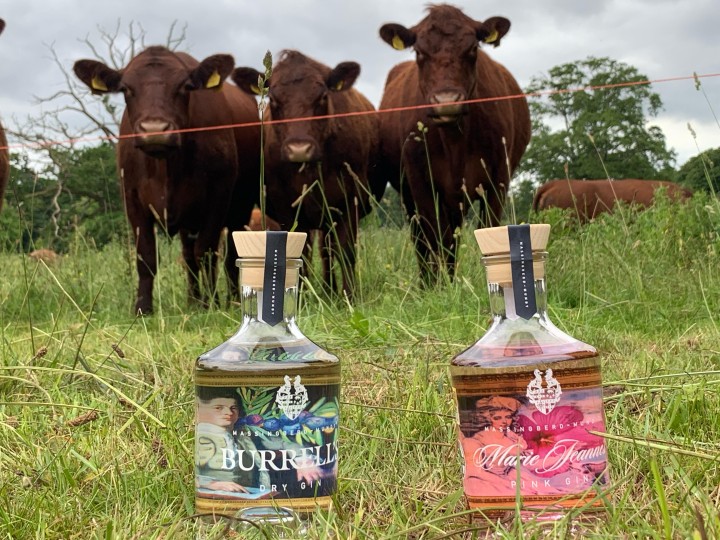
Jon has been selling the produce of his estate through an online retail platform for more than seven years. The website offers all the produce associated with South Ormsby’s native-breed Lincoln Red cattle, including a variety of beef cuts as well as mince and burgers. It also features the estate’s range of gins, stays at its Lincoln Red Lookout accommodation, and experiences such as farm walks and tours.

Customers can choose to order fresh or frozen meat, with frozen deliveries available year-round and monthly Saturday collections from the South Ormsby site. The shop is about to gain another string to its bow, with the first bottles of wine from the estate’s vineyard soon to be added.

For Jon, online retail makes it easier to share the farm’s nature-friendly ethos with a wider audience. “Selling in this way allows us to tell people the story of how we are involving nature in all of our processes,” he says. “It’s about people seeing what we do. By then offering the farm visits as well, we can take that further, so if people want to know more about how our organic vineyard is full of flowers and birds, they can come and see it.”

South Ormsby’s retail presence reaches both local audiences and those further afield. In the main, the meat is sold to customers in Lincolnshire and surrounding counties, while customers for the gin come from towns and cities right across England, including London, Cambridge and Manchester.

There’s also an important community ethos underpinning South Ormsby’s retail and online work. The farm runs Christmas collection events where people can enjoy entertainment, mince pies and mulled wine while picking up their orders. Its platform and social media channels also support the independent businesses based on the estate, including a doggy daycare centre and walking service and a farm school.

“When you’re starting a business, it can take a lot of time, effort and skill to market it successfully online,” Jon says. “The businesses based at South Ormsby can use our platforms to advertise or sell their products, and we’re helping to build a wider community in our area.”

Holly Purdey, Adam Reed and Leighanne Beart  - Horner Farm and Good Vibe Veg, Somerset

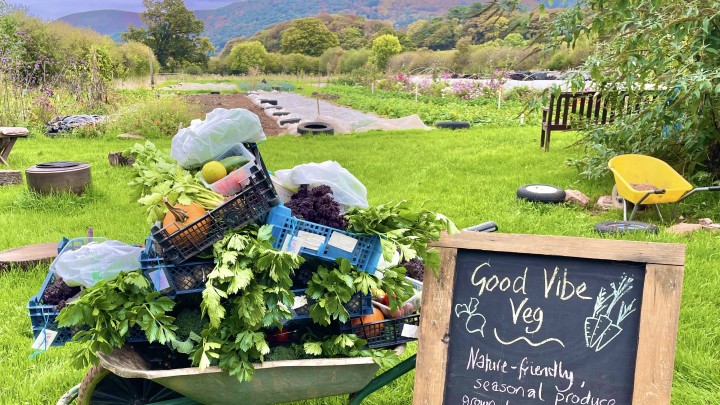
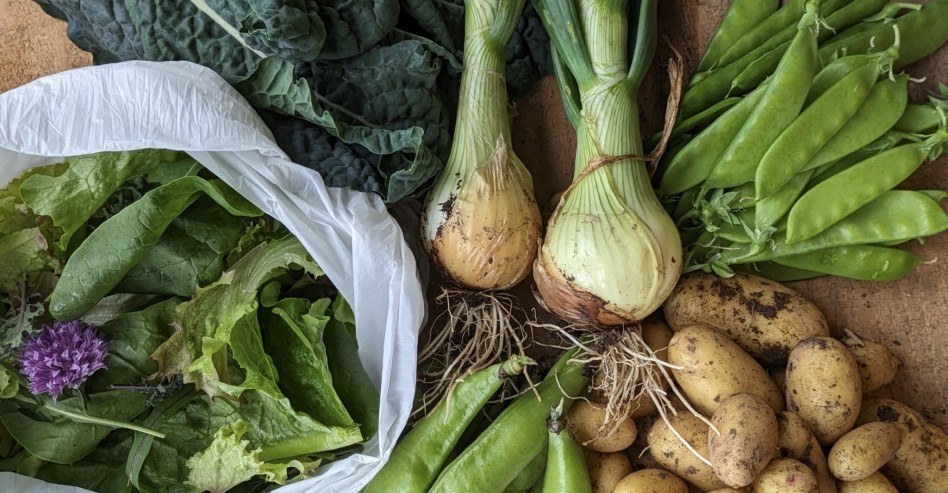
Good Vibe Veg is a Community Supported Agriculture (CSA) project growing vegetables to organic standards on the farm of NFFN farmer Holly Purdey. Members pay a monthly subscription fee and receive a weekly box of whatever produce is available. The scheme, run by Adam Reed and Leighanne Beart, currently supplies between 28 and 40 households (depending on the time of year) within a five-mile radius, as well as a couple of independent food shops.

For Adam, the subscription veg box model has worked well for establishing Good Vibe Veg. “Having our members subscribe and pay for their boxes in advance gives us the security of knowing there’s a market for our veg, and therefore how much we need to grow, allowing us to plan ahead more effectively,” he says. “We also don’t have the risk of turning up with a stall at an event and not selling anything, which would mean food went to waste. These two things are absolutely vital.”

Having subscribers also means Adam and Leighanne can experiment with growing a wider variety of vegetables, with a WhatsApp group set up to help members make the most of more unusual additions to the boxes. 

Good Vibe Veg is also working well for Holly, who is a livestock farmer. Box scheme members can pay an upgrade fee to have the farm’s eggs added to their weekly deliveries. The link is also bringing more people onto the site, with Horner Farm acting as one of the collection points and the CSA hosting a weekly volunteering session with around a dozen regular attendees. 

The farm also runs several seasonal markets, selling the range of produce grown or raised on site, including honey as well as meat, eggs and veg. Holly says the diverse offering makes the markets far more of a draw than if it were just a single livestock farm opening its doors, while Adam notes that people who attend, buy food and chat to the producers and often go on to become subscribers.

For Holly, this is all part of strengthening rural communities, something that is very important to her. “This farm now produces three different income streams for three families, all with kids in the local schools,” she says. “It helps us stay in this area where we want to live.”

How you can support nature-friendly farmers

There are several resources online which will help you find your local farm shops and options to purchase nature-friendly farmed food. 

Your Farm Shop has a directory of independent farm retailers across the UK, while Farming UK has a similar map enabling you to find farm shops nearby.  Fabulous Farm Shops also has a directory of places where you can buy food directly from farmers, while BigBarn allows you to enter your podcast and find local farm shops.

Pasture for Life has a directory of farms and approved businesses selling 100% pasture-fed meat and dairy, while the Soil Association allows you to find a local organic box scheme on its website.

Cookie consent

We use cookies on this website to improve your experience, provide social media features, and analyse our traffic. By clicking Accept All, you agree to the use of cookies as outlined in our Cookie & Privacy Policy. You can manage your cookie preferences at any time by clicking Cookie Settings.