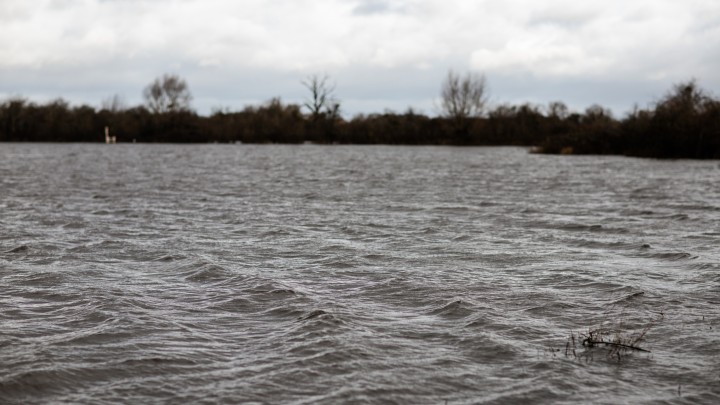

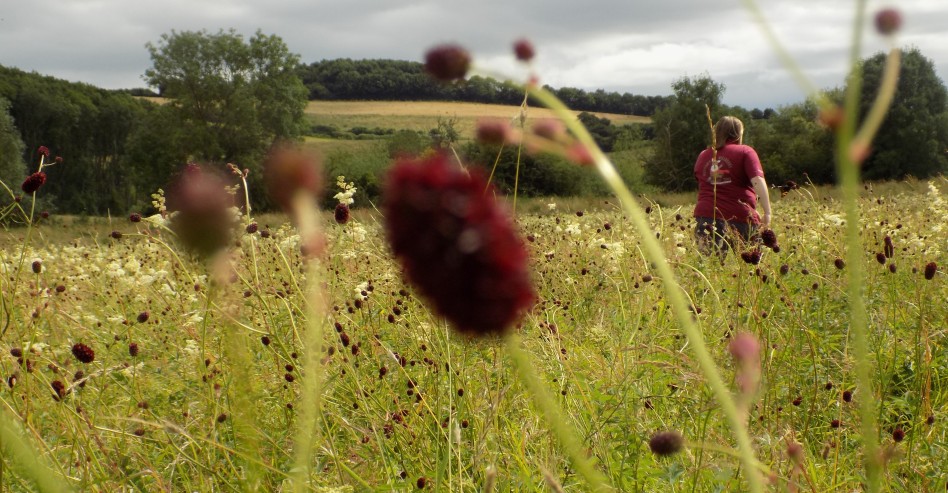
At Norton Court Farm in Gloucestershire, a nature-based approach along the River Severn is paying off.
For mixed farmer and NFFN member Debbie Wilkins, flooding is a fact of life. Her farm in Gloucestershire lies on the floodplain of the River Severn, with large areas typically underwater during the winter months, making arable cropping increasingly high-risk and unpredictable.
Debbie decided that integrating this land into a whole-farm approach was the best way to maintain financial viability and profitability in the face of these challenges.
What was the initial problem for Debbie?
In the wettest winters, around 300 acres of Norton Court Farm (roughly one-third of its total size) can be flooded. The farm includes around 120 acres located in a low-lying basin on the Severn’s floodplain, adjacent to a Site of Special Scientific Interest (SSSI) nature reserve.
In addition, there is a second 60-acre block of land on her farm that regularly floods, but is not protected by the river’s flood bank. This means water moves on and off the land more quickly than in the lower-lying basin.
This left Debbie with a dilemma: how to integrate land that is regularly underwater for part of the year into a successful mixed farming business producing arable crops and dairy.
Could the land be cropped?
Debbie says some of her neighbours along the Severn floodplain still try to grow arable crops, chiefly maize or spring barley, on land that floods annually. With maize costing farmers in the area at least £290 per hectare, even in relatively low-input systems, this strikes her as extremely risky.
“I’ve seen horrible pictures of local farmers trying to harvest maize from fields with two or three feet of water in them,” Debbie says. “I also know there have been years where nothing has been harvested at all. Maize is an expensive crop, and losing an entire harvest leaves farmers seriously out of pocket.
“I use limited herbicide and no artificial fertiliser on my arable crops, but many farmers would use fertiliser and spray a lot more than I do,” Debbie adds. “Going from stubble to stubble, I spent around £22,000 to grow 76 acres of maize last year, but I’ve seen figures of £1,000 or even more per acre from establishment to harvest.”
What was Debbie’s solution?
Debbie chose to act decisively in 2019. She took back the 60 unprotected acres, which had previously been used for spring cropping, and re-integrated them into the pasture grassland system for the livestock side of Norton Court Farm’s operation. This meant initial costs for seedbed preparation and sowing, but Debbie felt this was worth the investment.
“For me, it was all about the risk of not getting a crop off those fields that led to me turning them back into grassland,” she says. “I was also extremely concerned about what leaving bare soil exposed over the winter would do to my soil health, especially on fields that flood.”
Debbie has made the change work financially by producing hay from her floodplain meadows. Not only does this save her the cost of bought-in winter feed, but it also opens up the possibility of further income streams.