Resources

Lowering the environmental impact of soft fruit production

England
Farm Practices
climate change
fruit and vegetables
pesticide reduction
Renewable energy
Water

Clock House Farm in Kent is adopting a range of measures to cut the carbon footprint of supermarket supply in the UK.

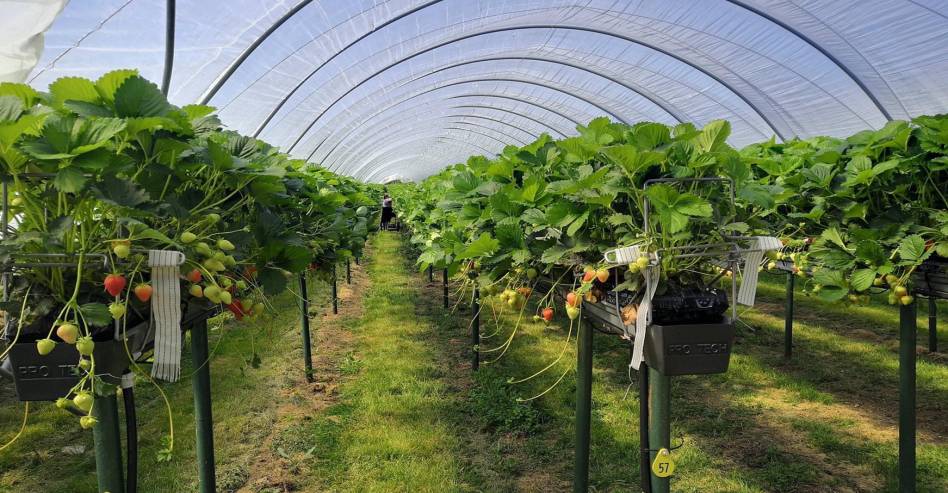
Clock House Farm is a multi-generation family farm business that currently grows across 270 hectares at eight separate sites in Kent. It supplies blackberries, strawberries and raspberries to major supermarkets across the UK, while also producing apples and plums.

Reducing the impact of its operations has long been an important consideration for the business, with areas of the farm managed specifically for nature. However, since 2020, it has embarked on an ambitious project to further reduce the environmental impact of the soft fruit growing process itself. 

This has involved developing innovative, sustainable solutions in two key areas: CO₂ and water.

How has Clock House Farm reduced its carbon emissions?

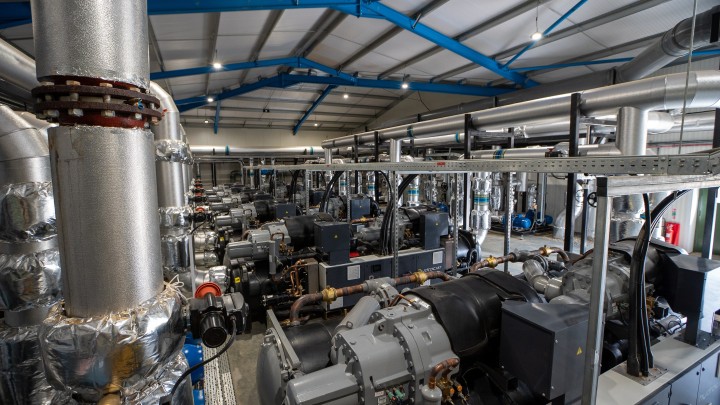
Soft fruit growing can be an energy-intensive process, with berries typically requiring greenhouses or polytunnels for commercial-scale production. Clock House Farm has reduced energy consumption while also boosting profit by extending the growing season, thanks to an ingenious scheme that draws power from the River Medway.

A heat source pump draws water from the river, with heat extracted using an exchanger. This is then raised to 45 degrees Celsius before being circulated into the polyhouses to nurture the fruit. The river itself is not depleted, as the water is out of the system for only a matter of seconds before being returned.

This approach enables Clock House Farm to extend production into the shoulder season, with its UK-grown soft fruits on supermarket shelves from mid-March through to December. It is hoped this will reduce the UK’s reliance on imports, lowering emissions and carbon footprints more widely. Compared to LPG - the most likely alternative fuel for the site - the system delivers a carbon saving of 3,861 tonnes of CO₂ Equivalent (tCo2e).

As the business continues to grow, Clock House Farm aims to reduce absolute emissions per kilogram of produce by at least 2.5% per year, aligning with global efforts to limit climate change to below 2°C of warming.

How has Clock House Farm improved its water management?

As one of the UK’s southernmost counties, drought is a significant issue for farmers in Kent, particularly for fruit growers. Clock House Farm has developed a two-pronged approach to address this.

Firstly, the business has been setting aside land that is no longer profitable for growing and creating reservoirs to increase its water supply. Clock House Farm now has 11 reservoirs with plans to expand water storage by 60% over the next two years. This also supports the farm’s wider social responsibility by reducing pressure on local water infrastructure during the summer months.

The farm has also developed rainwater management systems across its polytunnels. Rainwater is collected via the gutters and channelled into an attenuation basin, before being pumped back to a reservoir for use later in the summer. Crops are irrigated using a drip irrigation system, with water drawn from the reservoirs and delivered directly to the plant pots. Rainwater can also benefit crops due to its favourable pH, helping plants to take up nutrients more efficiently. 

The long, hot, dry summer of 2025 reinforced the importance of water management for the business. “We had really low rainfall and low river levels, which meant some of our abstraction licences could not be used,” managing director Oli Pascall says. “If we hadn’t invested in water storage and management, and planned for these occasions, it would have been very detrimental to production. It’s something we have to consider at every step as we grow the business.”

What else is Clock House Farm doing to reduce its environmental impact?

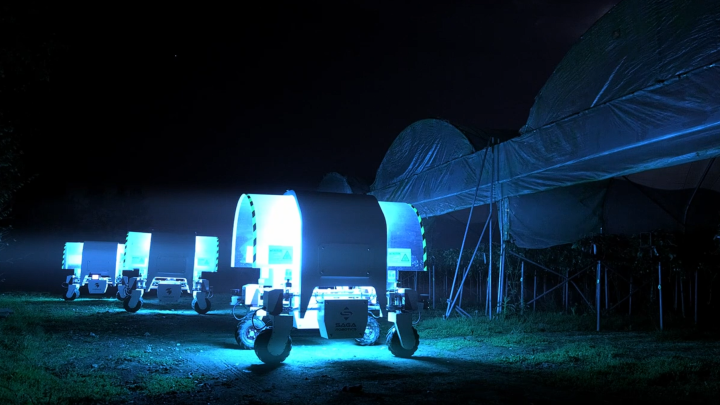
To reduce its dependence on chemicals, Clock House Farm has turned to technology. Mildew protection is now done by robots emitting ultraviolet (UV) light rather than relying on pesticides. Since their introduction to the polyhouses, the business’s spend on plant protection products has been slashed by almost 70%.

Clock House Farm remains open-minded about the potential benefits of such technologies, but believes they must be introduced carefully and assessed on a case-by-case basis. One area the farm is exploring for the future is the use of automated trolleys to transport picked fruit from the greenhouses to the packhouse, helping to streamline movement across the site. The business also sees potential environmental benefits in technologies powered by renewable energy sources, such as solar power.

Propagation takes place locally to reduce emissions from transport, while spent coir from the growing system is redistributed to local arable farms to support soil structure and fertility. Containers are recovered, sterilised and reused to extend their lifespan and reduce overall consumption, and organic waste streams (including surplus fruit) are sent to anaerobic digestion facilities to generate renewable energy.

The business also plans to put around 80 hectares of land into environmental stewardship schemes in 2026 and is part of Operation Turtle Dove, supporting feeding and habitat provision for one of the UK’s rarest farmland birds. 

Why is Clock House Farm doing all this?

The business’s long-term aim is to produce fruit as sustainably as possible, while meeting its environmental and social responsibility goals. It operates a circular production model, embedding resource efficiency from seedling to supermarket shelves. 

“We’re really looking to be a leader embodying best practices for carbon emissions reductions, biodiversity protection and water management,” Oli says. “We feel we have a role to play in ensuring food security and reducing imports to this country, as we can grow an excellent product at home. We also want to leave our land to the next generation in a better state than when we took it on.”

Cookie consent

We use cookies on this website to improve your experience, provide social media features, and analyse our traffic. By clicking Accept All, you agree to the use of cookies as outlined in our Cookie & Privacy Policy. You can manage your cookie preferences at any time by clicking Cookie Settings.