
Resources

How to start nature-friendly livestock farming

Wales
Farm Practices
Cattle
Hedgerows
native breeds
new entrant
rotational grazing
upland
woodland
natural flood management

NFFN farmer Claire Whittle talks us through what she learned during her first year of running a 230-acre upland farm in Wales.

Many people dream of one day running their own farm, but without a background in agriculture it can be hard to know where to start.

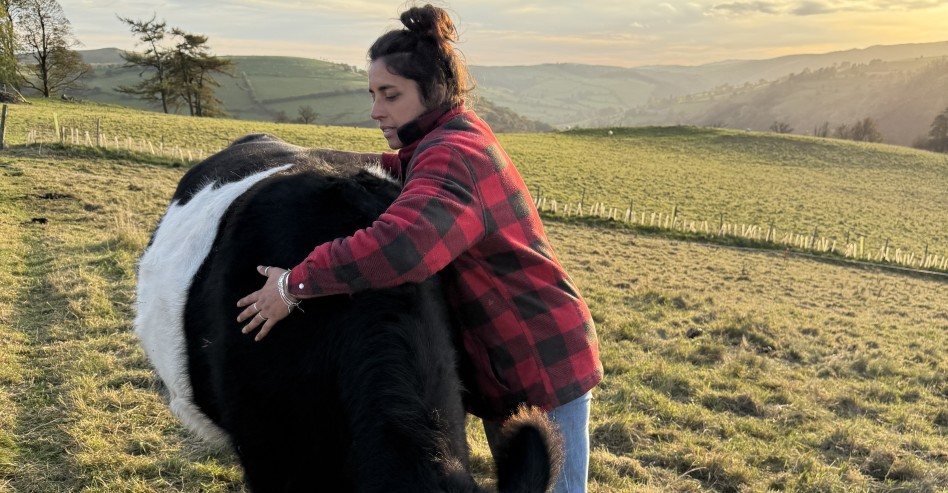
One person who has made the move into farming is NFFN Cymru steering group member Claire Whittle, who in October 2024 took on the 230 acres of Caedicws Farm in north-east Wales, alongside her work as a vet specialising in regenerative farming systems.

Here, she shares some of the main lessons she has learned in her first year as a nature-friendly farmer.

Take time to observe the land

As a first step, Claire was able to simply leave the land at Caedicws untouched for a full year after the large numbers of set-stocked sheep had been removed. This gave her the opportunity to observe the landscape and build her understanding of it before introducing a nature-friendly livestock system.

Even if a new nature-friendly farmer does not have a full 12 months without farming at their disposal, Claire recommends taking whatever time is possible to watch and learn from the land.

“The farm had been heavily overgrazed by sheep before I took over - it was like a lawn - so I wanted to watch to see which grasses grew and where, and try to understand the landscape better,” she says.
Starting small enables you to build confidence in your grazing system and in your abilities as a farmer, especially if you haven’t farmed before. If you tried to start out with 100 cows it might be quite overwhelming in your first year.

Claire Whittle

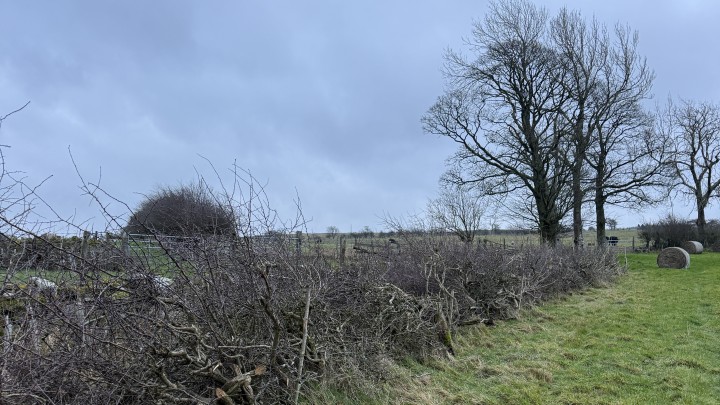
Claire could also see that the farm’s hedges were in very poor condition, having been excessively flailed and grazed at the base by sheep due to being left unprotected. She secured funding to plant new hedges, as well as to lay old ones, coppice and gap up. She was able to do this work during her first winter, meaning she was making improvements for nature before bringing livestock back into the farm.

Start small and build up

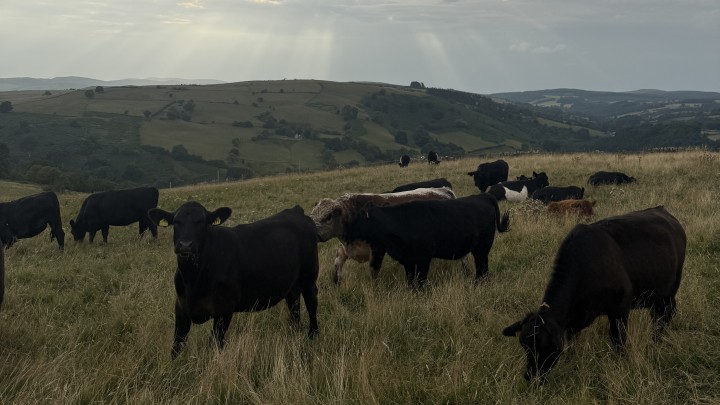
Having decided that the land needed a break from sheep farming, Claire began her new farming operation with 20 cattle: 15 Angus-Welsh Black cross heifers, three Belted Galloways, a Riggit-Galloway bull and a store animal of the same cross-breed to keep the bull company. Partly, this decision was shaped by what she could afford given high livestock and beef prices, but it also allowed her to get used to the demands of the rotational grazing system she wanted to implement.

“I think I’ve got a good number of animals to start with,” she says. “I’ve got 18 breeding animals, which means the herd should grow to a good size year on year. Starting small enables you to build confidence in your grazing system and in your abilities as a farmer, especially if you haven’t farmed before. If you tried to start out with 100 cows, it might be quite overwhelming in your first year.”

Claire also recommends opting for native breeds and speaking to organisations such as the Rare Breed Survival Trust (where she is a trustee) for advice. 

“Native breeds are very well adapted to the upland environment, whether that’s in Wales, Scotland or in England,” she says. “They have been bred to cope well with our landscapes, do well on rough, unimproved pasture, don’t need bought-in feeds, and should be able to outwinter. Mine have never seen the inside of a shed at all.”

Get started with rotational grazing 

Moving away from set stocking to some form of rotational, mob or adaptive multi-paddock grazing system is a key part of nature-friendly livestock farming. Claire recommends drawing up plans as you go and getting animals moving around the farm as quickly as possible - something that is easier to do in the early stages when numbers are relatively small. Even if you are unsure of your exact grazing plan at the outset, try to keep a record of which fields the animals have been in and how long they stayed there, so this can be tweaked accordingly.

Claire moves the cattle every other day during their first trip around the farm’s fields, but remains flexible, moving them more quickly or slowly if required. It is important that the grazing pattern fits with your lifestyle and circumstances. For Claire, working away frequently as a consultant vet means that two-day moves work well.

Livestock don’t actually need all that much - if you’ve got a decent water supply and some grass, you’re basically away. The one thing you need to avoid is them re-grazing grass that has just started regrowing because that puts stress on it, particularly during the growing season.

Claire Whittle

“If you can just get started with a rotational grazing system and ensure the grass is getting rest periods, you get so many benefits,” she says. “Livestock don’t actually need all that much - if you’ve got a decent water supply and some grass, you’re basically away. The one thing you need to avoid is them re-grazing grass that has just started regrowing because that puts stress on it, particularly during the growing season. Allowing grass to fully recover is important.”

Claire also has enough land to produce her own hay for the winter, with 116 bales put up. She believes her rotational grazing system should mean there is enough grass at Caedicws until the end of December.

One of the biggest issues Claire faces is a lack of shade and shelter. She has secured financial support from a number of funding bodies to plant native broadleaf trees. This winter, 460 will be planted to create small pockets of woodland, with plans for a further 3,000 hedgerow plants to create just under 500m of new hedgerow during the winter of 2025-26. 

Build a community around you

If you’re coming from an urban or suburban life, the small, scattered populations and comparative isolation of rural life can be something of a culture shock.

Claire was determined to ensure that right from the start, people were coming to Caedicws, creating a local hub based around shared interests in food, farming and nature.

“The hedge planting was one of the first big jobs I did here, so I set it up as a volunteer event over two weekends and lots of people turned up,” she recalls. “People love planting hedges or trees, it makes them really feel like they’re making a difference. I asked them to bring their own lunch and provided tea and cake. 

“It was a really nice way to meet people from the local area and feel like I was becoming part of the community.”

Claire now intends to continue public events at Caedicws, with plans for farm walks. She also co-founded a local cluster group looking at nature-based solutions to flooding from the River Ceiriog and wants to encourage other complementary enterprises, such as pigs for other habitats on the farm.

Don’t be afraid to ask for help

Getting things wrong is inevitable in the early stages of setting up a nature-friendly farm. However, there are plenty of people who are happy to share their expertise and help solve issues.

“I wouldn’t be farming at all if it wasn’t for my neighbour, who came round to fix the water supply a week before the cows arrived,” Claire says. “I’m also really grateful to the regenerative farming community and organisations like the NFFN. Everyone is so open and willing to come and help out, or chat on the phone, and you’re never made to feel silly for asking questions. 

“There’s always someone I can call if I have a problem. I’ve learned so much from farmers through my work as a vet, and I continue to learn from farmers.”

Cookie consent

We use cookies on this website to improve your experience, provide social media features, and analyse our traffic. By clicking Accept All, you agree to the use of cookies as outlined in our Cookie & Privacy Policy. You can manage your cookie preferences at any time by clicking Cookie Settings.