
Resources

How nature-friendly farming can save farmland from wildfires

Wales
Farm Practices
grassland
grazing
peatland
slow the flow
upland
Weather Resilience
whole farm approach

There are a number of ways changing agricultural practices could help reduce the devastation caused by the flames.

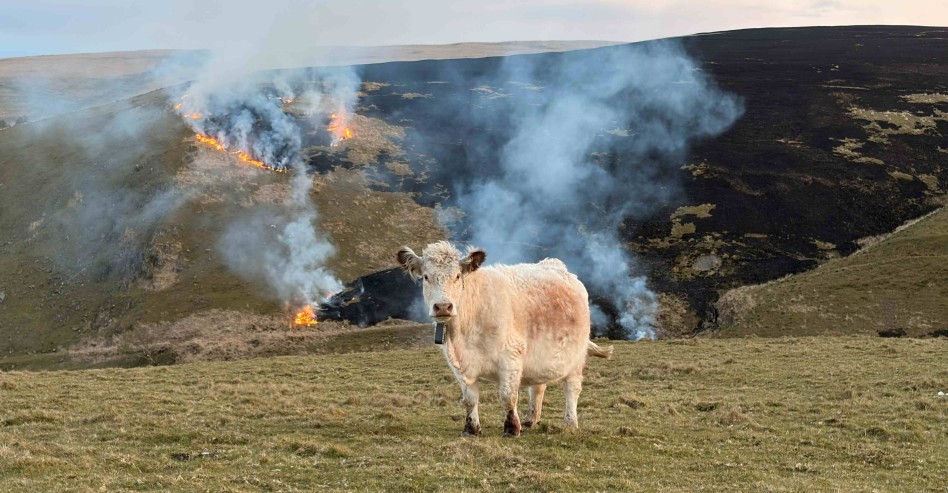
At the end of April 2026, areas of mid-Wales were hit by wildfires of devastating scale and intensity. More than 8,000 hectares of valuable natural habitats burned in the space of a week.

In the wake of these devastating fires, several NFFN Cymru farmers spoke to journalist Deb Luxon from the Local Storytelling Exchange to discuss how nature-friendly farming approaches could reduce the damage caused by these blazes.

Why peatland rewetting is vital

NFFN Cymru steering group farmer Sorcha Lewis watched the flames descend from the Elan Valley uplands in the direction of her home.

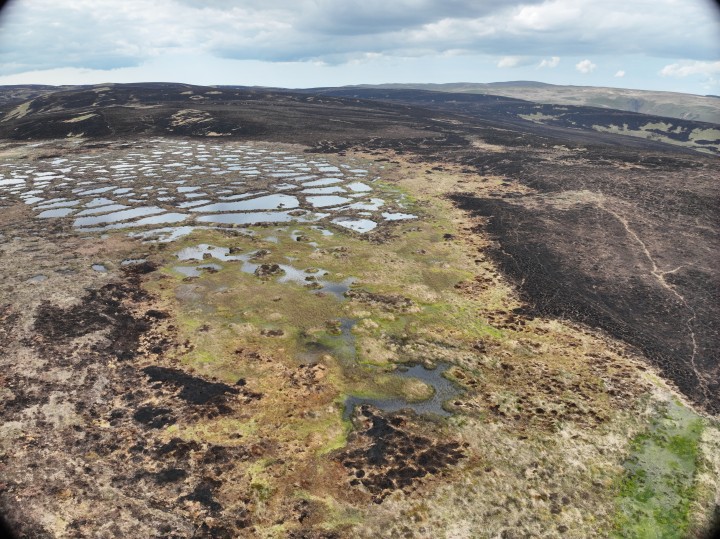
However, drone footage showed there was one area the flames did not touch. A striking line separated the black, burnt land from the areas where peatland rewetting began 18 months previously and which remained a patch of green and blue, with watery pools of peat.

Sorcha says: “Restoring peatland makes the land more resilient to climate factors - when it rains too much, it soaks it up. When you’ve got wildfires, it can stop the fire’s movement by just being damper ground.
“This is why, as farmers, we need to get into the mindset of making the landscape resilient, because if it’s resilient for nature, it’s resilient for farming.”

Where peat was previously wet but has dried out, small dams can be created.  This encourages water to collect and allows plants like moss to recover and creating the watery areas that act as vital carbon sinks.

On her farm, Sorcha uses wool from her sheep to create small embankments called bunds (pictured above) which trap the water and ensure it soaks into the soil rather than running off. She says investment is needed so more farmers and landowners can begin restoring peat on their lands. Sorcha hopes the scale of the recent wildfires will show just how vital this work is.

What other problems are contributing to wildfires?

The increase in purple moor grass (Molinia caerulea) in upland areas, combined with dry weather and high winds, is also contributing to the scale of the wildfires now being seen in the region.

Potential solutions being explored to combat this include different livestock grazing regimes and mowing fire breaks into the landscape.

NFFN Cymru chair Hywel Morgan has experienced issues with purple moor grass on the common land that he grazes. His sheep wouldn’t eat the molinia, which then dies back in winter, creating a thick thatch of dry, flammable material.

The turning point for him was gaining a licence to graze cattle on the common, which he thinks is a far more effective approach than doing controlled burning.

“Instantly I could see the benefits, not just for me and my livestock system, but for the habitat and fire load,” Hywel says.

Are there other ways of dealing with the issue?

NFFN Cymru sustainable farming officer Ifan Davies highlights the need for a range of different approaches to be deployed simultaneously to combat the threat of wildfires.

He credits the “patchworks of land” on his farm, which include peat bogs, for preventing the small wildfires on his land from spreading further.

He says rotational grazing can also help to prevent wildfires, as the soil holds moisture better so is damper while the grasses are also more resilient and less likely to die back in hot periods.

“Mosaics everywhere are very important as a preventative strategy for fire risk,” he says.

Cookie consent

We use cookies on this website to improve your experience, provide social media features, and analyse our traffic. By clicking Accept All, you agree to the use of cookies as outlined in our Cookie & Privacy Policy. You can manage your cookie preferences at any time by clicking Cookie Settings.