
For Dafydd Owen, herbal leys are a key part of Coed Coch adopting an ever- more regenerative farming system
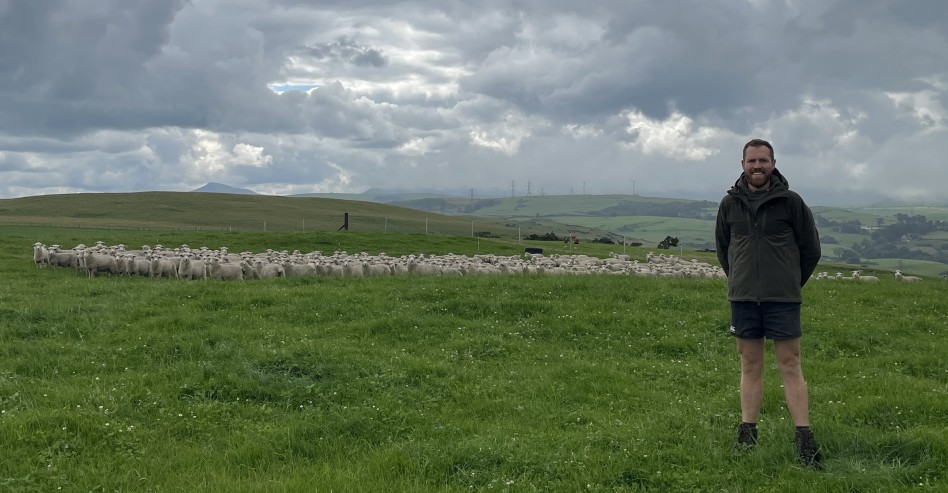
Coed Coch is a 400-hectare sheep farm covering both lowland and upland habitats near Abergele in North Wales. NFFN farmer Dafydd Owen explains how herbal leys play a crucial role in its nature-friendly approach to livestock farming.
The basics - why are herbal leys important?
“Herbal leys are part of our general move towards becoming ever more regenerative. We farm around 2,000 Romney ewes and breed our own replacements, managing the estate on a grass-only system with no fertiliser or bought-in feed, using rotational grazing.
“We mainly use the herbal leys after weaning, prioritising the best grazing areas for fattening lambs. We previously relied on swedes over winter, but moved away from forage crops to minimise soil disturbance and reduce cost, including on chemicals.
“We’ve established around 100 acres of herbal leys, which still isn’t a huge proportion of the whole farm. They include deep-rooting plants like plantain and chicory, with mixes varying across the farm. Upland leys contain more cocksfoot and timothy, while lowland fields have higher levels of ryegrass and festulolium.”