
How careful grazing and rest periods have transformed the farm’s land and livestock.
Pentrefelin, in Denbighshire, has dual-purpose cattle grazing on 138 acres of owned and rented land. NFFN farmer Huw Foulkes explains why long rest periods for his grass paddocks are crucial to his nature-friendly system.
The basics - why are graze and rest important?
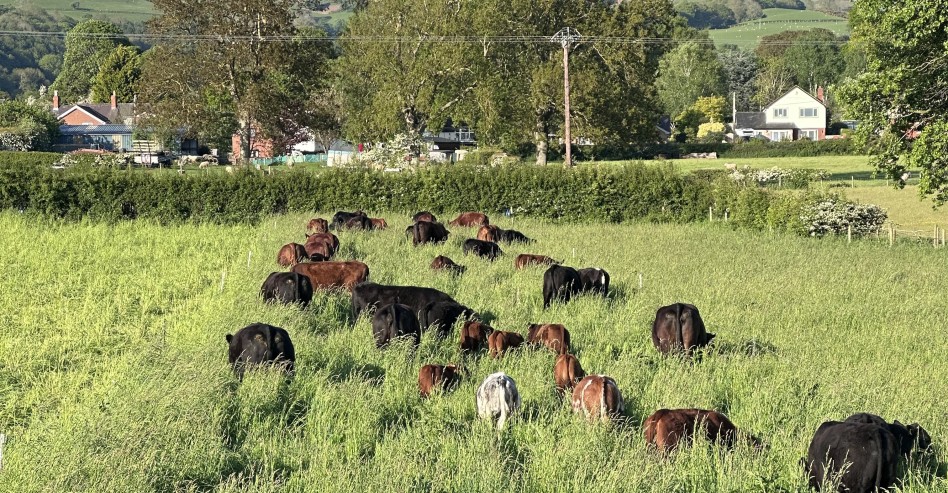
“People have lots of different ideas of what mob grazing is, but for us the most important part is the resting period we give each paddock. We aim for at least 60 to 90 days’ rest between grazing, with the ultimate goal of establishing deeper-rooting plants in the paddocks. We’ve been developing this over a few years to make sure our grazing really benefits the soil.
“The cows get a fresh paddock each day, but the system has to be quite flexible to accommodate different times of year. In spring and autumn we need bigger paddocks, whereas in the middle of summer they get smaller ones. Last winter, I managed to keep the milking cattle out every day, all through winter, although sometimes they do come in for the day.”
What has the impact of this been?
“You can see with the naked eye that the soil is a lot healthier, and testing we’ve done shows that our water infiltration has improved a lot. You can also cope with drought far better when you farm in this way.
"We've also had to ensure there is enough shelter for the cattle from the rain in winter and the sun in summer. We have set up a few agroforestry lanes in fields which didn't have shelter, and we try to ensure the paddocks back up to a hedge line, with the hedges allowed to grow tall. We want every paddock to have either a good tall hedge or a tree in it. We are planting more trees across the farm every year, though it will take them a few years to establish.
“We’re also seeing increased biodiversity on the farm, because with rest periods of this length the grass can grow up to your waist or chest, providing amazing habitat. I’ve particularly spotted more red kites around the farm. You can also see that the cows are really thriving on this system. If you pick old heritage and native breeds, like we’ve done with the Red Polls, they just shine with good health and condition, especially in summer and autumn.
“With this system, we are not just growing grass to feed cows, we are nurturing an entire ecosystem.”
How has the farm business been impacted?
“The biggest impact is that we have become more self-sufficient. Last year, for the first time, I was able to feed my milking cows grass 365 days of the year. The costs of bought-in feed and fertiliser no longer apply to us, although we still do some bale grazing of hay and make silage. The contractor’s costs for that, along with diesel for the tractor, are now our main expenses.
“The farm’s carrying capacity has increased. With more grass year on year, I have been able to build up stock numbers. The cows are milking better than at any time in the previous four to five years, so we’ve not had any issues around declining yield