
We explore how the South Ormsby Estate in Lincolnshire has navigated heatwaves and drought across its extensive pea-growing operation.
The summer of 2026, with its unprecedentedly high temperatures and long periods of drought, has been especially challenging for farms growing vegetables.
One such farm is the South Ormsby Estate in the Lincolnshire Wolds, run by NFFN farmer Jon Thornes. Its large mixed operation includes 100 acres of peas being grown for human consumption through a contract with a large canning firm, which rents land from the estate.
Altogether, peas and beans account for around 750 acres of land at South Ormsby, although the majority of the beans are currently grown for animal feed rather than for human consumption.
How does pea growing at South Ormsby work?
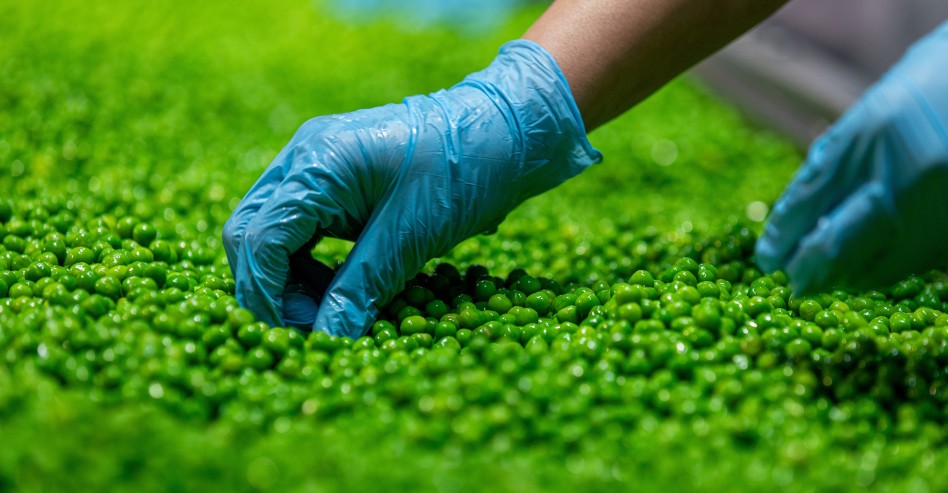
South Ormsby is one of hundreds of farms across the UK used each year by a major food company to grow both organic and non-organic peas. Ahead of each growing season, the company is informed how many acres of organic and non-organic land South Ormsby has available. It then responds with how much land it requires for the following growing season. The company likes peas to be grown in long rotations to ensure there are no issues with diseases, with South Ormsby spreading out pea growing in any particular area by around a decade.
Jon and his team at South Ormsby have no further input into how the peas are grown. Questions around varieties, yields and so on are entirely decided by the company, which is also wholly responsible for the outcomes. All the work, from maintenance of the crops to harvesting, is done by the company, its equipment and its employees.
Most peas are fairly quick-growing crops and the ones produced at South Ormsby are no exception. The peas are grown over a period of between eight and 10 weeks, from planting around May to harvesting towards the end of July. The company chooses when in the calendar it wants peas from South Ormsby to maintain its supply.
How did the peas at South Ormsby fare in 2026?
Despite the adverse growing conditions for much of the summer, South Ormsby actually had a better pea harvest in 2026 than in 2025. Jon believes this is because moisture levels in the soil when the peas are drilled are a significant factor in a successful outcome.
“In 2025 we were growing them on light, chalky Wolds soil and it was very dry, so the peas never really got off the ground,” Jon says. “In the end we invited local people to come in and pick their own peas, because they didn’t grow tall enough for the harvesting machinery.
“In 2026, by contrast, we were growing them after quite a wet winter in Lincolnshire, so there was still enough moisture in the ground when they were drilled to give them a good start.” Jon suggests moisture in the soil for the first half of the growing period is particularly important for the size and quality of the peas, with planting in dry soil likely to result in small peas.