
On Chris Jones' mixed farm, nature's ecosystem engineers are providing water even in drought.
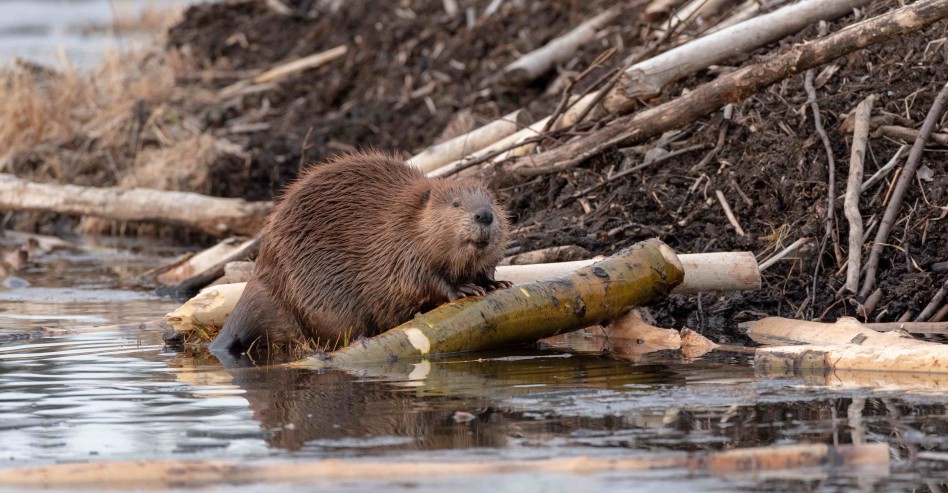
Chris Jones’ farm is well known in nature-friendly farming and conservation circles as the home of the Cornwall Beaver Project. A prominent advocate for beaver reintroduction, Chris believes they can play an important role as ecosystem engineers when they are in the right place.
Here, he explains how beavers have helped ensure his farm had enough water through the extraordinarily dry summer of 2026, benefiting everything from livestock rearing to horticulture.
How does Chris farm and what is the impact of the changing climate?
Chris farms the 170 acres of Woodland Valley Farm, which includes a 50-strong (and growing) herd of pasture-fed Hereford and North Devon cattle, a six-acre nut plantation and around 300 apple trees planted in agroforestry rows across the farm.
The farm sells organic meat, while the apples are supplied to a local cider and juice maker, mainly for visitors to the farm’s accommodation and its educational and study days. Surplus horticulture crops are sold through an independent farm shop.
Although Cornwall is somewhat protected from the worst of climate change-induced heating and drought due to its geographical location and coastlines, Chris says temperatures are rising there. “This year we’ve had maximum temperatures of around 31 or 32 degrees Celsius,” he says. “Historically, anything above 24 degrees C would have been a very hot day, and even going back 10 years or so, it would have been unusual. Drought was previously a phenomenon that happened about once a decade, while now it is every other year.”
How have the beavers helped?
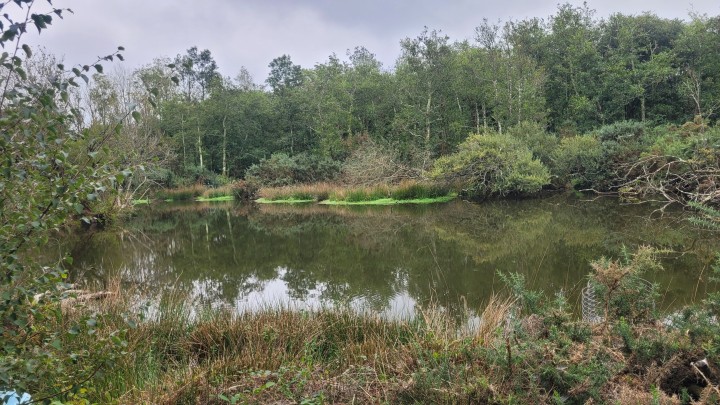
Chris is in no doubt that the beavers on his farm have helped make the land much more resilient to the drought of summer 2026. “What the beavers are doing is holding back a lot of water,” he says. “People are always asking how we’ve got so much water on the farm. There’s more now than there has ever been.
“When the water comes in, the beavers build up mud and silt, ensuring the flow of the stream gets weaker and weaker. The water then spreads out further and gets deeper. We’ve now got a reserve of about three million litres of water.”
However, the effects of beavers have not been uniform across the farm. “We would definitely be in a much worse position without our beavers, but it has been particularly positive for the grass side of our farming,” Chris says. “Due to our management, all our cattle have still got 10 weeks grazing ahead of them, even if it’s brown. But fruit and nuts need moisture in the soil to swell, so this long, hot, dry summer has not been good for either of them. The apple and hazelnut crops are going to be small this year.”