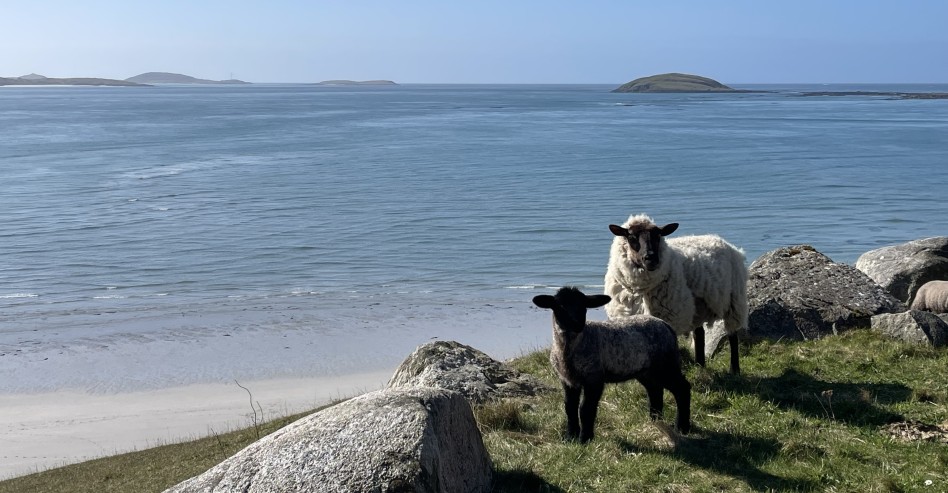
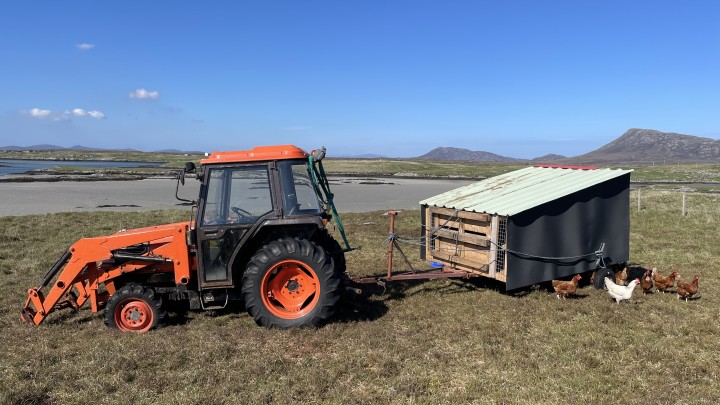
Most crofters still raise store sheep and cattle or breeding stock, alongside producing food for their own families. However, crofting nowadays can involve a wider range of other activities, including environmental restoration and the production of meat, vegetables, fruit and other food products for local or high-end retail markets.
Crofting is not usually a full-time occupation. In addition to their crofting activities, most crofters have other jobs, while some also diversify into education or agritourism. There are also woodland crofts, many created more recently on former forestry plantations, where tree nurseries are among the options available.
The history of crofting
The first Crofters’ Holding Act in 1886 was a consequence of popular uprisings in the Highlands and Islands over high rents and a lack of secure tenure and access to land, which eventually led to the Napier Commission inquiry in 1884.
The Crofters’ Holding Act, in part, sought to mitigate and reverse the devastation of the Highland Clearances between the mid-1800s and mid-1900s, when large numbers of people were forcibly displaced from the land to make way for large-scale sheep farming. While crofting is specific to the Highlands and Islands, similar systems of collaborative, small-scale agricultural practices have supported people, families and communities across large parts of Scotland for centuries.
Since its introduction, crofting law has undergone a number of reforms, the latest concluded in 2026. While the legislative framework that has developed over time continues to set out the rights, responsibilities and procedures governing crofting tenure, crofting law has become complex and, at times, unwieldy. The Scottish government is committed to wholesale simplification and adjustment of crofting law to better meet the needs of crofting in the 21st century.
How does crofting work?
Under crofting’s rules, someone is legally a crofter if they are either an owner-occupier of a croft or a tenant. Crofters have a number of rights, including the right to improve their inbye land or to build a house on the croft.
However, they must also comply with two essential duties: they must live on the croft or within 32km of it, and they must not misuse or neglect the croft. The duty to cultivate the croft is not limited to keeping livestock or cropping, but can also include activities such as managed environmental restoration.
Crofters’ duties are enforced by the Crofting Commission, the regulatory body responsible for crofting law and governance. In extreme circumstances, where a croft has been neglected for a long time, tenancies can be terminated and the croft reassigned to someone else. This power is important to ensure that crofts are actively worked and in maintaining the social fabric of crofting communities.
Within each crofting township, common grazings are usually overseen by a grazings committee, an elected body of crofters that manages the shared land, organises improvements and acts as a bridge to landowners and the Crofting Commission. Grazing committees play a central role in crofting, one which is often overlooked. Currently, many grazings do not have an active committee, for a range of reasons.