
Resources

5 ways farmers can support insects and build farm resilience

United Kingdom
Farm Practices
biodiversity
IPM
Hedgerows
SFI
Water

Small changes can support insects while helping farms cope with heat and drought.

Insects do a lot of work on farms. They pollinate crops, support natural pest control, feed other wildlife and contribute to healthy soils. The habitats that support them can also help farms cope better with increasingly extreme weather. 

Here are five practical ways farmers can give insects a boost while delivering wider benefits for the farm. For English farmers, we also provide guidance on the payments available to support these actions.


1. Hold more water in the landscape

Water is one of the most important resources for insects during periods of heat and drought. Holding water in the landscape during  wetter winter months can help create habitats that remain valuable later in the year.

  • Watercourses, floodplains and farm ponds can become important centres of insect activity, particularly when surrounded by flowering plants such as purple loosestrife, greater bird's-foot trefoil or fleabane. These habitats also support predators such as spiders, dragonflies and ground beetles, helping with natural pest control.

  • Wet flushes within fields can be particularly good locations for ponds because they can fill naturally from groundwater. They are often among the less productive areas of arable fields and improved grasslands.

  • Ponds can also help with livestock-related challenges. Dragonflies and damselflies prey on midges, the primary vector of bluetongue.

Livestock farmers should avoid heavy, year-round poaching by livestock, which can churn banks and overload water with nutrients. However, occasional grazing of ponds and their wildflower margins can benefit plant and invertebrate diversity and help remove invasive plants such as Himalayan balsam. At exceptional times, the margins can also provide standing hay that livestock can graze.
Ponds can also help with livestock-related challenges. Dragonflies and damselflies prey on midges, the primary vector of bluetongue.

Farming in England?

Consider using CS Capital Grants to fund projects that hold back water during wetter periods, including:

  • WN12: Create or restore ponds up to 2 hectares

  • WN2: Creation of scrapes and gutters

  • RP11: Swales

Wet flushes can also provide an income through SFI. For example, a single 25m² pond using WBD1: Manage ponds, with a 24m buffer strip using BFS1: 12m to 24m watercourse buffer strip on cultivated land, would be worth £438.02 annually for the 0.27ha it covers.

There is also an annual SFI maintenance payment through WBD1: Manage ponds. A single 25m² pond can attract £257 per pond per year, with a maximum of three ponds per hectare, compared with £151/ha for permanent grassland under CLIG3.


2. Look after hedgerows and trees

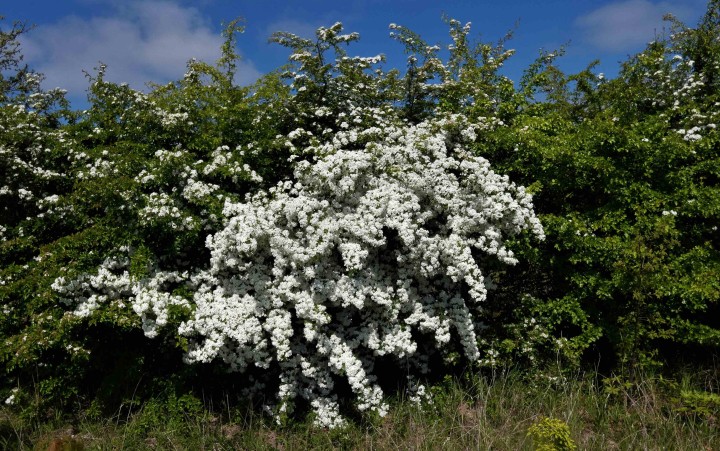
Hedgerows and in-field trees provide valuable habitat and connectivity for insects. Well-fenced hedgerows support a wide range of invertebrates, while trees provide pollen and can act as important mating stations for butterflies.

Trees and hedges also provide shade for livestock during heat stress, while pasture beneath trees may remain productive when surrounding grass has stopped growing.

Farming in England?

Support for creating hedgerows is available through:

  • BN3: Earth bank creation

  • BN11: Planting new hedges

These can be particularly valuable when combined with a wildflower-rich grass margin, such as CIPM2: Flower-rich grass margins, blocks or in-field strips.

Support for hedgerow trees has been removed from SFI, but in-field trees can be supported through agroforestry options including AGF1 and AGF2. Capital funding for trees and guards can also be secured through CS Capital Grants after completing a PA4: Agroforestry plan.

3. Build diversity into your grassland

Permanent pastures with a high proportion of herbs appear to cope better with drought than less diverse pastures, while providing valuable habitat and food for insects.

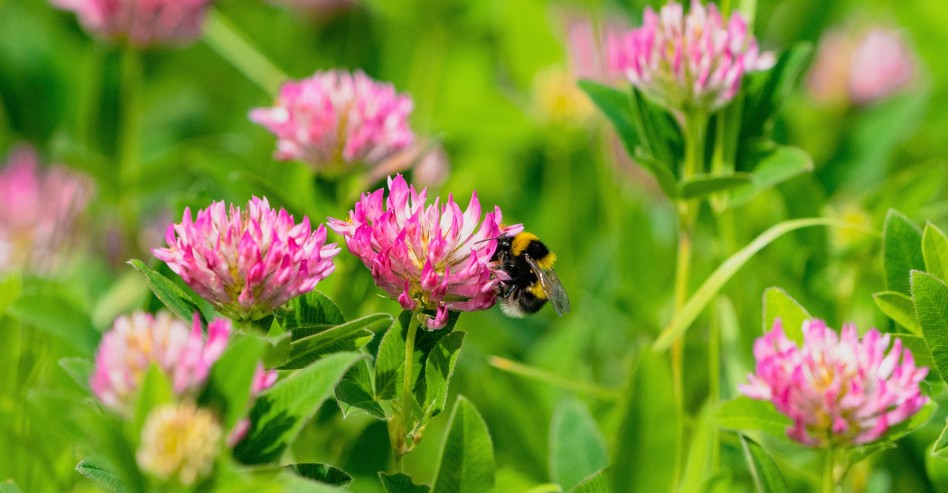
Deep-rooted herbs such as ribwort plantain, red clover or common bird's-foot trefoil can remain relatively healthy when grasses are struggling, while also providing valuable nectar for pollinators.

Diverse, herb-rich grassland may also offer practical benefits for forage production. If heavy rain arrives before October, some farmers may still be able to take a third cut of very herb-rich silage from improved grasslands.


4. Don't underestimate your 'weeds'

Flowering plants that we often consider weeds can be extremely valuable sources of food for pollinators. Thistles and ragwort are good examples.

While controlling their spread may sometimes be necessary, preferably through topping rather than herbicide use, a 2022 study found that, on average, these 'weeds' produced four times more nectar sugar than the recommended pollinator plants used in pollinator mixes.  

Pollinator mixes are still a fantastic resource on farms, but this research suggests that leaving areas of naturally occurring wild plants, including 'weeds', along field margins can be highly beneficial.

A simple action: cut less. Avoid over-cutting these areas, particularly during drought when they can become even more valuable.

Farming in England?

SFI options that can support this include:

  • CAHL3: Grassy field corners or blocks

  • CIGL1: Take grassland field corners or blocks out of management

These rough areas also provide important nesting habitat for bumblebees, which are twice as efficient at pollinating as honeybees, as well as refuge for ground beetles and other predatory insects.

Making the less productive parts of the farm work harder for biodiversity can provide significant benefits while potentially supporting farm resilience and income.

5. Create a connected network of insect habitat

The biggest opportunity may be to think about these measures as a network rather than as individual features.

A pond with a flowering margin, connected to a hedgerow, trees, diverse grassland and areas of longer vegetation can provide insects with the food, water, shelter and movement corridors they need throughout the year.

The aim isn't necessarily to turn productive farmland into nature reserves. Instead, making the less productive parts of the farm work harder for biodiversity - wet flushes, field corners, margins, hedgerows and areas of 'weeds' - can provide significant benefits while potentially supporting farm resilience and income.


This guidance has been produced in partnership with Buglife.

For more information on SFI26, read our blog.

Cookie consent

We use cookies on this website to improve your experience, provide social media features, and analyse our traffic. By clicking Accept All, you agree to the use of cookies as outlined in our Cookie & Privacy Policy. You can manage your cookie preferences at any time by clicking Cookie Settings.