
News

'We want to shift the farming system' - NFFN CEO speaks to The Organic Grower magazine

United Kingdom
Organic
nature-friendly farming
regenerative farming

Photo by Mahtola Eagle-Lippiatt

NFFN CEO Martin Lines recently sat down with The Organic Grower for a wide-ranging interview covering the similarities and differences between nature-friendly, organic and regenerative farming, the use of chemical inputs, accreditation schemes and more. The following interview was originally published in the Winter 2025 edition of the magazine.

Can you define what you mean by nature-friendly farming?
Helping farmers look at nature within their landscape. For some it may be just starting with a species, but for others it’s the fundamentals of looking at soil biology, natural environment and pollinators, and recognising that nature underpins our system and our farming system. So, we’re helping farmers go on that journey to view and to value nature and to embed it into their systems.

Tell us about the Nature Friendly Farming Network.

It was set up in 2017 and launched in 2018. It’s a farmer membership organisation, but we are also open to the public and other organisations. We have a farming steering group in England, Wales, Northern Ireland, Scotland, to support the work we do. It has three main levels. One is peer to peer learning, sharing stories, case studies – inspiring farmers. Two is lifting that voice up to the press, media, public, and three, further up into the policymaking arena. We do a lot of policy advocacy with those farmer voices demonstrating what is happening on the ground and the solutions we can lead but also how policy could lead us in a better direction.

How does organic farming fit in with nature-friendly farming?

Many of our members are organic, and we support the organic movement. I think farmers can take inspiration and lessons from organic practices and embed them into their system. For some farmers, organic seems a long way away from their current practice.

So, how can we help those farmers understand what they can put in their system and take them towards a more organic system? For some they can go all the way. So, it’s working with/using the organic practices/principles to help other farmers reduce inputs and focus on wider outputs and benefits within their system.

Would you agree that organic farming is a proven approach of nature-friendly farming?
Yes, organic values soil health, habitats and good rotations. It is one of the delivery tools of nature for farming. Organic is a good, certified measured system that values nature.

Organic is clearly defined and regulated. Organic farmers are regenerative farmers because they’re already focusing on good rotations, organic matter, and natural fertility. 

For me, it’s about making sure there is distinction between the language you use, helping farmers understand and blur those barriers, to understand how other practices are delivered so they can pick up and learn lessons, avoiding silos (conventional, regenerative, organic) as there is so much we can learn from each other. And that’s what the network tries to achieve, to say look over here there’s a good thing. Come and pick up what you can. But we’re going in that direction to see and value nature in our system. And for many organic farmers, they’re already far down that path, and I, as a farmer, take inspiration from a lot of organic farmers and they help me shift my system by taking lessons from what they’re doing.

Often the word organic can be a barrier, but if you get a group of (conventional and organic) farmers in a room together they find they have more in common than they don’t. 

That’s one of the reasons we created the network because you had the conservationists and people at one end (of a room), you had conventional farmers at the other, often squabbling, and many farmers on the ground have tried to find solutions for their own systems and farms. Let’s give them the support, and the voice, and use organic and regenerative farmers to demonstrate solutions.

Does the NFFN promote organic? And if not, why not? 

It is part of what we promote. We don’t promote it as an individual thing, but we’re making sure that organic farmers are part of our case studies, part of the story we’re telling to help farmers and the public to see the choices they have, and hopefully inspiring farmers and public on a system that has a lot fewer inputs and is moving in the direction of a better system.

Do you think the organic word is off-putting to many farmers that might be sympathetic to what organic farming actually is?  

The ‘organic’ word sometimes provokes preconceived ideas of what it means, so they believe they can’t do it, rather than learning what they can do and see how it works. So, there is always a barrier. Many farmers on that high-input system believe organic cannot work for them. We can show them how we can do it or help them see how it can be done. 

The public perceives organic as a premium brand, expensive, it’s different. What they may not understand is that organic has Standards that define the outcomes it delivers. Non-organic produce may not be paying the full cost of production for water quality, air quality, etc., where we pay for it a second time through regulation or through government funding to clear up the mess that the farming system delivers.

Why is the UK different to the EU, where organic farming is seen as an important mechanism to deliver environmental benefits together with food production? 

I think organic has an image problem and probably a language problem. Sometimes, talking with policy-makers and supply chains, organic is like ‘that premium product over there.’ We’ve seen post-Brexit UK farming policy move away from recognised support for organic farming. Organic already delivers so much of the outcomes for the environmental improvement plan, so why not put the focus on that system and give clear recognition for what it does. That’s where we as a network can add support to the organic sector. How do we move farmers in that direction at a pace that they can adapt their business and see organic farming as a North Star for more farmers to move towards that system?

One of the major differences between organic and regenerative is the use of glyphosate and fertilisers. Organic farmers have concerns that regenerative can be used as to promote herbicide use over physical cultivation and be a bit of a greenwashing exercise.  

The network recognises regenerative farming, and delivered under the clear principles of regenerative farming, it is a positive move forward from where we are. But it shouldn’t be a system that is reliant on chemicals, particularly glyphosate, to deliver it. Cultivation done correctly and well is not as negative as it is sometimes perceived. We cannot have a food production and farming system built around one pesticide, because nature will overcome it. We’re already seeing this happen with glyphosate resistance. I use organic farmers as an example, where we do not need to use Roundup or other pesticides, and organic farmers demonstrate daily how we don’t have to. 

The challenge is, how do we shift the farmers and the investment in machinery and technology and self-learning to be fully regenerative? We’ve got to move away from fossil fuel-based inputs. We’ve got to look to more circular soil health, building fertility with manures, compost and other things. But for many farmers, they have been taken down a path of simple solutions from cans and bottles. We’ve got to retrain and inform those farmers of different principles and practices and get them to invest in that knowledge and the machinery to deliver those outcomes. 
Regen Ag is a good movement to shift momentum, but it can't be an end destination. We've got to carry on that journey to low-input or no-input systems, which means a complete change in the supply chain, because the volumes of animal feed, energy crops and other things has to change. We have more than enough land to feed the nation.

Martin Lines

For me, Regen Ag is a good movement to shift momentum, but it can’t be an end destination. We’ve got to carry on that journey to low-input or no-input kind of systems, which means a complete change in the supply chain, because the volumes of animal feed, energy crops and other things has to change. We have more than enough land to feed the nation, but we use most of our land to feed animals or energy plants.

My view is, if we have a broad spectrum of farmers within the network and within the industry, if I can help move 50% of the farmers from the far end of input systems towards a lower or no-input systems, that’s a benefit. Moving the top end a bit further forward actually won’t deliver the change we need within our farming system and doesn’t empower farmers to take ownership of their production.

What can we do as an industry to communicate the nuances between regenerative farming and organic to consumers and move towards truly sustainable practices?

I think one of the things we can do is getting other farmers and organisations to champion organic systems and highlight the benefits they can deliver, rather than just the organic farmers and organisations telling the story. It’s organisations like NFFN and others, using organic farmers as case studies, that can demonstrate the value that system is delivering, and also highlight the challenges the current system many farmers are in, the damage that may be causing to water quality, air quality and through pesticide pollution. We need to champion all best practices and help everybody move in a positive direction.

You say on your website: ‘Our mission is to take nature-friendly farming to a new level, making it mainstream.’ What does that look like? Are farmers checked on any nature-friendly measures they say they take?   

We have looked at accreditation and certification, but haven’t gone there, because there’s plenty of good certification and accreditation (schemes) from organics and others (e.g. Pasture for Life). We encourage people to say they are a member of the Network and they want to deliver work towards nature friendly principles. 

As an organisation we have to take farmers on a journey and recognise nature as an asset in their business, with nature underpinning our farming systems and the UK economy. So how do we make the farming system nature friendly that actually delivers not just food, but all of the other stuff from our landscape, and making sure all of it gets paid for or recognised? We produce food, but we also do flood mitigation, carbon capture, nature restoration. We have to inspire politicians and farmers that they have the solutions and can deliver that.

Farmers have got to have some pride in what they do, and what we hope is farmers have pride in demonstrating the things they are doing to value nature in their landscape. We don’t charge a membership. We haven’t got the funds to inspect every farm, but we do encourage farmers to get involved with organisations where they can gain market recognition and accreditation and guarantee what they’re doing.  

It’s great you don’t charge a membership fee, which makes you really accessible to everybody. How do you fund yourself? 

We go to people (Trusts, Foundations etc) who’ve got funds and ask if they can help support us. When we set up the network we recognised that the most value we can offer is for the unwilling to have access to the information and be inspired. If we put a payment at the front it would stop the sceptical farmer from engaging. So that’s how we’re trying to run the organisation, that we can be that first step, a pathway to other organisations and other practices.

How can a shopper know that what they are buying is at all friendly to nature?

They either identify a certification scheme like organic or Pasture for Life or trust the brand or the company that is selling the product. So, certain supermarkets and brands are focusing on nature as an important element from that production system. We’ve got to trust but also hold to account companies and supply chains that are not. There’s too much green washing going on – pretty pictures and nice words. As citizens buying food, we’ve got to ask the right questions. Not just supply chains and supermarkets; if we’re in a pub restaurant or eating out we should ask the question ‘Where has that product come from?’

Organic horticulture delivers strong environmental benefits, especially for biodiversity due to diverse plants and habitats in small areas. However, small organic growers face greater barriers to environmental subsidies: paperwork is proportionally heavier for many small-scale actions, while large estates can afford specialists to apply efficiently. As a result, in time-limited schemes like CS and SFI, organic growers are often disadvantaged or excluded. What changes would NFFN support to address this imbalance?

Organic horticulture delivers so much value because growers aren’t using the insecticides that are causing harm to biodiversity. We need to communicate to the consumer why organic growers’ products may look different and could have some insects on but that’s a positive thing, because you haven’t used these products that are harming our wider environment.

We’ve moved away from a subsidy scheme and decoupled from area-based payments, and we now have public money for public goods. We need to make sure that public money is valuing the system that delivers multiple outcomes like organic and make sure growers have access. The challenge has been that in England it was first over the post that captured all the money. Many active, particularly smaller farms and small production systems are nose to the grindstone working flat out, and they haven’t got the time (or money for agents) to make applications at certain times of the year. 

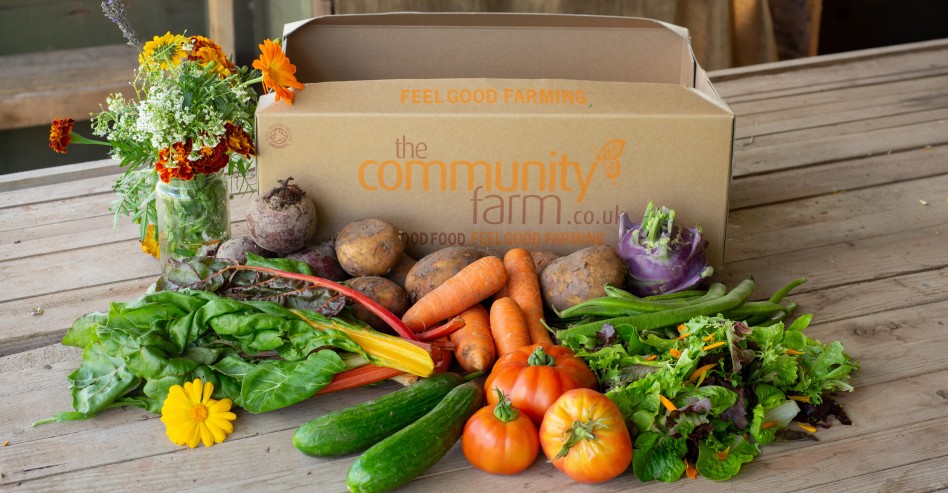
Photo courtesy of The Community Farm

So, we have been championing that additional support gets focused on applications – moving the timeframe, so it’s all through  the year, and maybe quarterly applications, so everyone can get  a bite of the cherry. We’re trying to encourage that the system rewards and recognises the additional cost for smaller production in those payment applications and the value they get to weight it downwards and cap things in the right place to benefit the smaller production system. 

But we’ve got to get the governments to articulate what they want that public money for public goods to deliver socially, not just for environment or production. Is social cohesion and the value of small systems a priority for government to keep people on the landscape and to keep farmers’ farming? If so, there needs to be a value that should be put into public money for public goods that rewards smaller production systems.

Would NFFN be willing to work with others to lobby for these?

Yes, and we already do work across organisations, and we welcome collaboration where there is clear, joined-up activity and goals, because as an organisation, we want to help shift the farming system to deliver a range of better outcomes, and particularly support and help inspire farmers by supporting organic systems.

Is there anything else you’d like to say?

We've talked a bit about horticulture. I think for many farmers that have a low-input system, bringing livestock back in and diversity in production is valuable. It’s making sure that those livestock units also have a supply chain system that works with local abattoirs, local butchering system that has the organic standard, or values the animal, not just for its meat, but also for the biodiversity and soil health that results. So, how can we look at the organic system for all it needs, and make sure the supply chain and the system is in those local communities, to keep the value in those communities?

Do you have many horticultural growers within your network?

We have quite a few, particularly in southwest England, in parts of Scotland, Wales and Northern Ireland, where there are still smaller farming systems. I’m in Cambridge where we have a bigger farm landscape, and bigger arable farms. Where the farming system hasn’t expanded hugely, those smaller farms can really deliver financial returns by changing the system. 

How can we encourage links between OGA and the NFFN?

We have a network of diversity and we want to share things to farmers from a different range of farms to inspire them. So, if you’ve got information, stories, case studies that would help other farmers see organic farming or systems as something they could put into their farming system, I’m up for sharing that, because that’s how we can inspire farmers to shift their mindset and their production.

Cookie consent

We use cookies on this website to improve your experience, provide social media features, and analyse our traffic. By clicking Accept All, you agree to the use of cookies as outlined in our Cookie & Privacy Policy. You can manage your cookie preferences at any time by clicking Cookie Settings.