
Four NFFN farmers have spoken about how extreme weather conditions due to climate change are affecting their nature-friendly livestock operations.
Extreme weather conditions made worse by climate change are having a considerable impact on NFFN livestock farms.
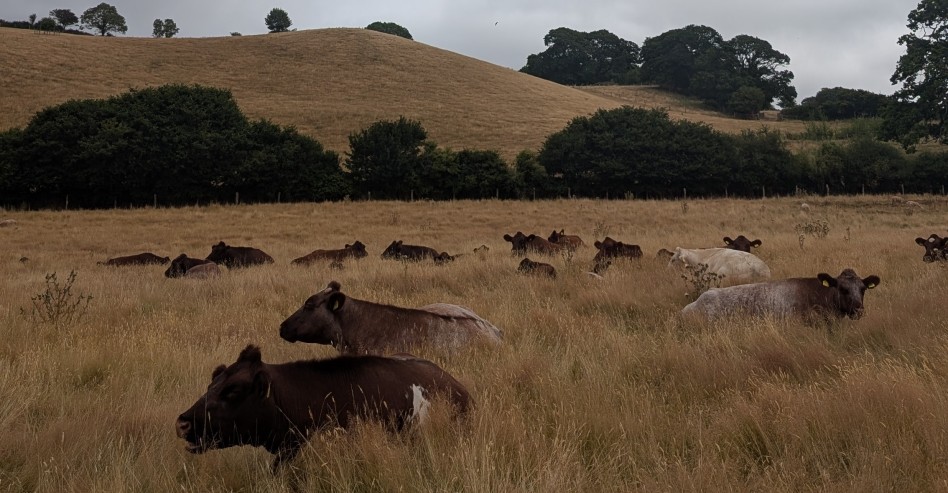
Farmers in England and Wales have spoken of how they are being affected after grass growth in 2026 was almost halved compared to recent years due to a long period of drought.
Analysis by the Energy and Climate Intelligence Unit (ECIU) thinktank found grass growth was 46% below the 2019-24 average for the week ending 31 July. Data shows grass growth was close to normal throughout spring and early summer before dropping away dramatically in July as rainfall all but stopped across parts of England.
This means farmers have much lower yields of silage and hay, and in some cases are already having to feed their animals food which should have been set aside for winter.
NFFN farmers have acknowledged conditions across the summer of 2026 have been extremely challenging, although their adoption of nature-friendly farming techniques has helped.
What did NFFN farmers say?
NFFN England vice chair Holly Purdey, who farms on Exmoor in Somerset, said: "There's been no regrowth on our hay fields at all, so we can't wean lambs onto them the way we normally would.
"Our only natural water source has dried up and the water bill has gone through the roof. We're eating into grazing we'd normally save for later, so we'll be feeding hay for longer this winter as well."