

News

Climate crisis demands fundamental rethink of farming

United Kingdom
climate action
climate change
drought
Emissions
food security
food system
Water

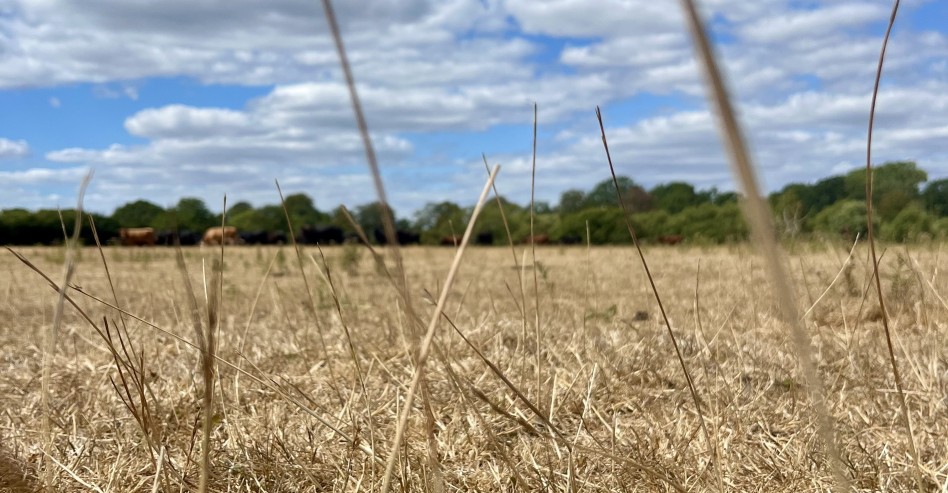
The enormous impact of the latest summer of heatwaves and drought must be a turning point for radical action to change how we produce food and manage landscapes.

The UK needs a fundamental rethink of how farmland is managed if it is to cope with increasingly severe floods, droughts and heatwaves driven by continued fossil fuel use, the NFFN says.

After another year of record-breaking heatwaves and droughts, it is clear short-term responses to individual weather events are no longer enough. Instead, farming policy and corporate investment must focus on long-term resilience.

Farmers need to recognise water as their most valuable resource, prioritising healthy soils that can absorb and retain rainfall, alongside creating more on-farm ponds and reservoirs to store water for prolonged dry periods.

We're calling on the Government and the private sector to provide greater financial support for water infrastructure and simplify the planning process for work with clear environmental outcomes.

Our CEO Martin Lines said: “Water is the single most important resource on any farm and increasingly the biggest challenge farmers face. This summer has shown the new reality. Without fundamental change, it will only become harder and the impact will become bigger.

"Too much of the debate still focuses on responding to the latest drought or flood. That approach is no longer enough. We need a long-term rethink of how we manage water across entire landscapes so farms are better prepared for both extremes.

Too much of the debate still focuses on responding to the latest drought or flood. That approach is no longer enough. We need a long-term rethink of how we manage water across entire landscapes so farms are better prepared for both extremes

Martin Lines

"The only way to reduce the worsening impacts of these weather extremes is to burn far fewer fossil fuels. Agriculture must play its part, but the wider economy also needs to move much faster. Simply talking about carbon reductions is not enough if we fail to tackle our dependence on fossil fuels.

“At the same time, farmers need practical support to adapt. That means storing more water in healthy soils, ponds and reservoirs, removing unnecessary barriers to resilient infrastructure, and giving businesses the confidence to invest for the long term.” 

Extreme weather has played havoc with arable harvests in recent years, with 2026 set to be the worst on record. Four of the five poorest harvests on record have occurred within the past decade, according to research by the Energy and Climate Intelligence Unit (ECIU).

Alongside improving water security, farms will increasingly need capacity to store key agricultural inputs, including fodder for animals and fertiliser. This year's weather has severely reduced grass growth, leaving many livestock farmers with lower hay and silage supplies ahead of winter. Farmers need to move from reacting to individual events to managing risk across the whole year.

The failure to tackle climate change at the scale and speed required now represents the greatest threat to UK agriculture and food security. Supporting nature-friendly farming must go hand in hand with rapidly reducing fossil fuel use if farm businesses are to remain economically and environmentally resilient. 

Our CEO Martin added: “If we want resilient farm businesses and secure food production, we cannot keep treating the symptoms while ignoring the cause. We need to end our dependence on fossil fuels, rethink how we manage our landscapes, and give farmers the tools they need to adapt to a changing climate." 

Cookie consent

We use cookies on this website to improve your experience, provide social media features, and analyse our traffic. By clicking Accept All, you agree to the use of cookies as outlined in our Cookie & Privacy Policy. You can manage your cookie preferences at any time by clicking Cookie Settings.