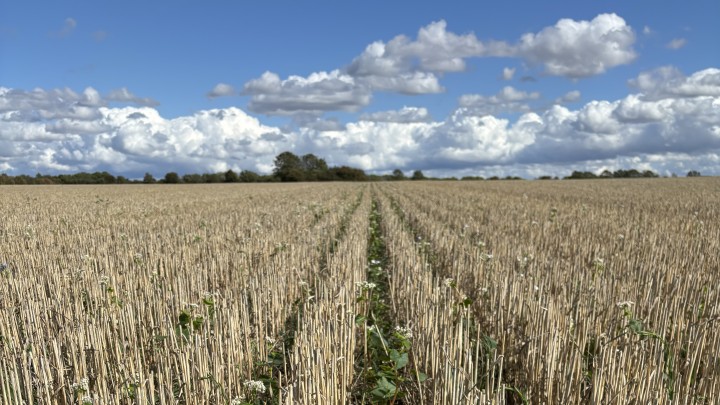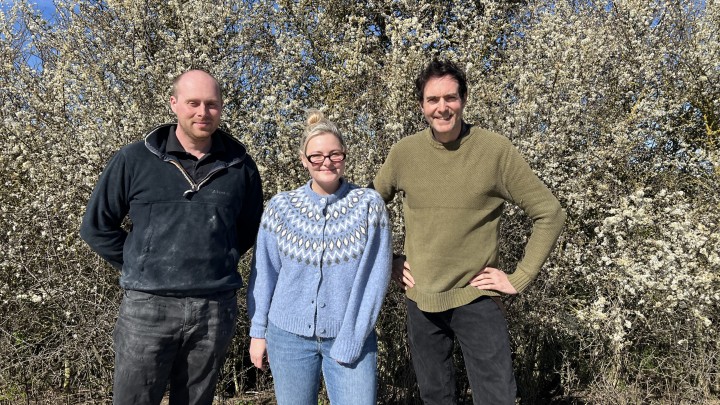

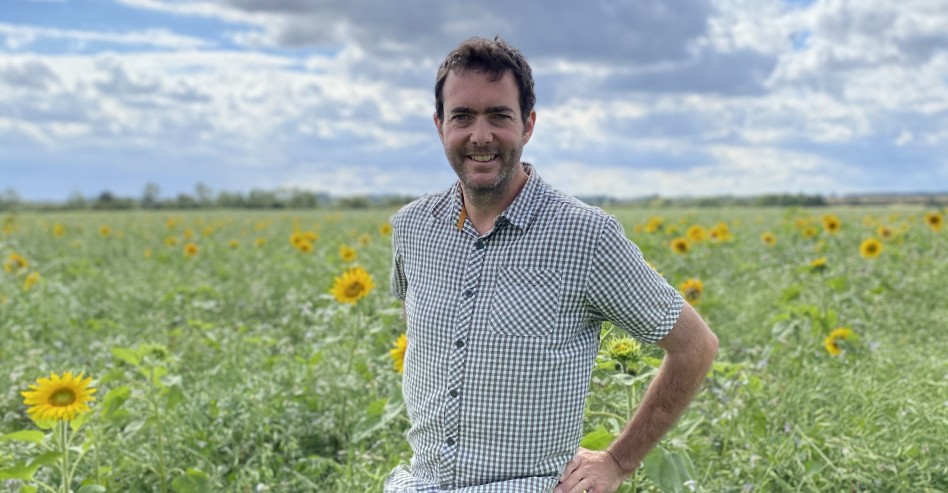
Manor Farm, lying 10 miles west of Cambridge city centre in the village of Caxton, is a 600-hectare arable farming business. Some of this land has been in Tom Pearson’s family since the 1680s, though he is a third-generation farmer after ownership passed to his grandfather in the 1950s. Under his stewardship, the farm is moving to the next stage of its journey to become more nature-friendly.
Tom was interested in farming growing up, helping with harvests as a teenager, but the business wasn’t able to pay him and his dad. He studied medicine in Edinburgh before working in the NHS as a hospital doctor and GP, and later abroad in the humanitarian aid sector. In 2015, he returned to the farm to take up the reins.
Tom’s dad farmed in a fairly conventional way, but made space for nature, with Manor Farm entering some of the earliest agri-environmental schemes in England. Hedgerows were retained rather than grubbed out, tree planting was a regular winter job and field margins were established. By the time he took over, however, Tom had decided he wanted to fully embrace working with nature and started transitioning towards a fully regenerative approach.
“As I didn’t have any formal agricultural training, I was looking at courses to improve my knowledge when I took over the farm,” Tom recalls. “This happened to be a time when soil health and regenerative agriculture were being talked about, so that became the focus of many of the farm walks and short courses I attended. I also started going to Groundswell and joined BASE UK. My work in medicine had made me very aware of the importance of nature for people’s mental and physical wellbeing.”
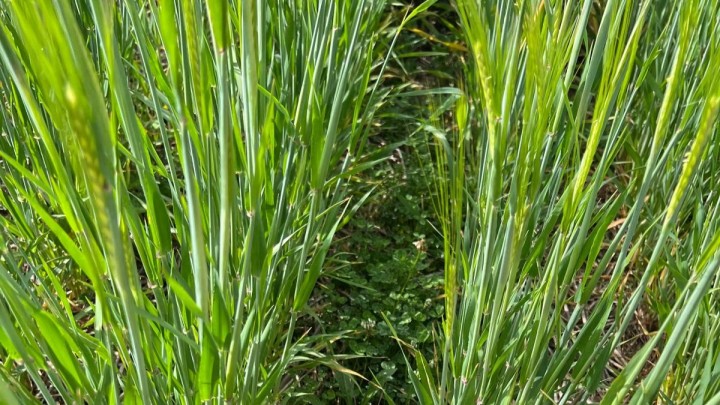
Initially the farm’s long-serving staff were sceptical of Tom’s regenerative enthusiasm, but he persuaded the team to adopt a direct drill, as it helped tackle blackgrass by minimising soil disturbance during spring drilling. This also allowed Tom to begin experimenting with cover cropping, at a time when many were still unsure it would work on heavy clay soils.