
Farmer Stories

Ruth Grice - Carbon and co-operatives in dairy farming

England
Case Study
biodiversity
Dairy
Emissions
grazing
Hedgerows
Sustainable Farming Incentive
Trees

How a fourth-generation farmer is combining nature-friendly practices and profitable milk production at her family’s Leicestershire dairy farm.

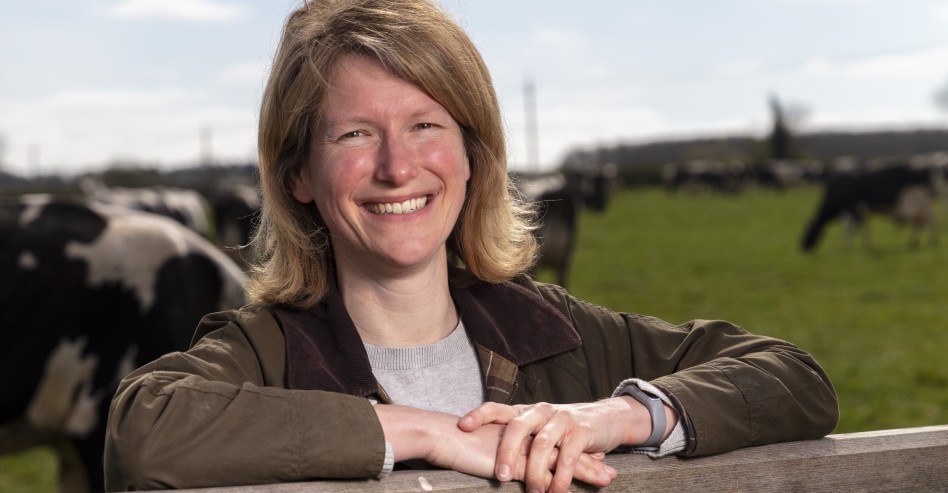
Yard Farm comprises 110 hectares of undulating fields near the Leicestershire town of Melton Mowbray, renowned as a rural food capital, where Ruth Grice farms alongside her parents. Ruth’s passion for securing a positive future for farming has led her to combine working in the family business with a role in sustainability for a local dairy co-operative.

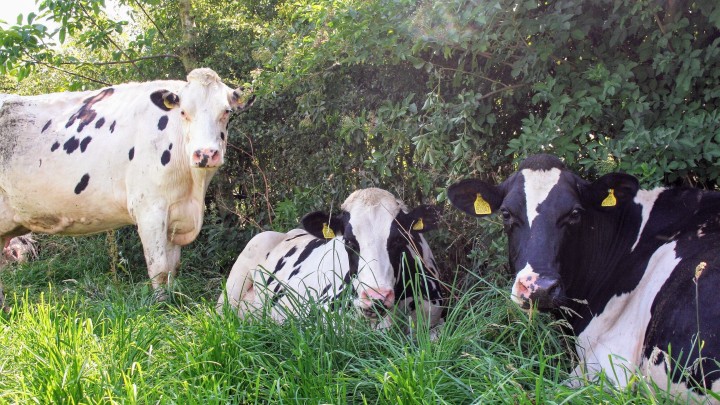
The Grice family has been farming in the area since the mid-1700s, and Ruth is the fourth generation to farm at Yard Farm since her great-grandfather and grandfather bought it in 1952. The business, which straddles the Leicestershire-Nottinghamshire border, has evolved from a traditional mixed farm in the 1950s into a dedicated dairy enterprise, with a milking herd of 250 pedigree Holsteins and 100 followers. For the past 30 years, milk has been sold to Long Clawson Dairy, a co-operative based just five miles from the farm.

Ruth enjoyed growing up on the farm, but did not initially see agriculture as a career choice. In part, this was because she wanted to explore something different, but also because of the lack of public-facing female role models. “Especially in dairy farming, it was nothing like it is now, with so many brilliant women sharing their stories and showing the art of the possible,” she says. Instead, Ruth studied geography at university before spending more than 15 years in the non-profit sector with the Woodland Trust and The Wildlife Trusts.

It was a chance conversation at work that sparked Ruth’s desire to return to her roots. “We were working on trying to buy a piece of land in Buckinghamshire and my colleague spoke about how special the area was to him because he had grown up there,” she recalls. “I suddenly felt that I wanted to return to Leicestershire and the farm.” She then completed an MBA in Advanced Farm Management at the Royal Agricultural University in Cirencester and, in 2017, began combining her role at The Wildlife Trusts with working alongside her mum and dad on the farm.

Ruth credits her rural, agricultural upbringing with inspiring her to work in the environmental sector, and says she has been able to bring many of the skills she learned back to farming. “My parents have passed down the belief that you should leave land in a better condition than you found it,” she says. “They’ve created a really strong foundation, which I hope I’m building on.”
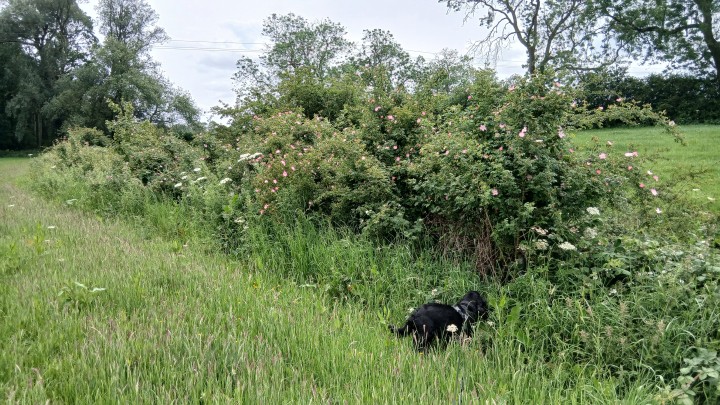
In the past few years, 1.5km of new hedgerows have been planted at Yard Farm, mainly on land purchased in the 1980s which was in poor condition after years of intensive arable production. New trees have also been planted within established hedgerows every year for more than a decade, as part of a Leicestershire County Council scheme. This provides established native specimens to landowners to counter issues such as Dutch elm disease and ash dieback, both of which have hit the county hard. The hedgerows form the primary habitat for biodiversity at Yard Farm, as Leicestershire’s fertile soil have made it one of the country’s least wooded counties for centuries. 

The family’s cows are grazed seasonally at Yard Farm. Typically, the herd is outside between early April and mid-October, depending on the field condition. “We’re on heavy clay soils here, and we really can’t afford any poaching of the grass,” Ruth says. Grazing is split into blocks, with grass conditions monitored daily and animals rotated to allow suitable recovery periods. Grass growth is maintained through a combination of organic fertiliser and additional nitrogen. When a grazing field starts looking tired, it is planted with crops such as winter wheat, winter barley or maize to provide feed for when the cows are housed over winter.

This combination of crop breaks and cow manure means that average soil organic matter is around eight or nine per cent, with some fields reaching 12% or 13%. To ensure the soil is not disturbed excessively, the farm uses a min-till approach to crop production, while contractors use lighter machinery and make fewer passes when producing silage or spreading slurry.

Clover has been added to the grass leys to help fix nitrogen and maintain good soil health. The milking herd is fed a total mixed ration (TMR), as well as cake in the milking parlour. In early 2024, the farm reduced its carbon footprint by going soya-free on all purchased concentrates. Bought-in feed is sourced from within the UK wherever possible, with fodder beet coming from Herefordshire. Continually improving herd genetics is also central to the success of the business, and the farm has operated as a closed herd for the past 30 years.

I want our cows to still be able to graze the fields in 20 years’ time, and if the weather continues as it is, with these hot, dry summers, we are going to have to make changes.

Ruth Grice

Since 2020, the farm has measured its carbon emissions annually as part of Long Clawson Dairy’s sustainability programme. Data is submitted to, and analysed by, an expert team which then makes recommendations on how emissions can be reduced further. Delivering the Clawson sustainability programme forms a significant part of Ruth’s off-farm role as the dairy’s farm liaison and sustainability manager, a position she carries out four days a week.

Long Clawson Dairy is a co-operative comprising 31 family-owned dairy farms, with around two-thirds based in Leicestershire and the remainder in Nottinghamshire. Milk from members’ farms is turned into award-winning Blue Stilton cheese, as well as Shropshire Blue and a traditionally-made Red Leicester called Rutland Red. The dairy sells most of its cheeses to UK supermarkets, with the remainder exported to more than 40 countries around the world and supplied to UK food service businesses such as restaurants, cafes and delicatessens. 

Ruth joined Clawson in June 2023 while undertaking research for a Nuffield Farming Scholarship Trust project, which explored the relationship between dairy farmers and environmental organisations. She wanted to understand how the two communities could work together to tackle climate change and enhance UK food security.

Her role at Clawson involves working towards the co-operative’s ambitious target of reducing carbon emissions by 30%  by 2032, while also delivering its own farm assurance standards covering animal welfare, improving water quality, increasing biodiversity and supporting local communities.

Ruth began her role at Clawson by visiting all the co-operative’s farms and listening to what they were already doing for nature and the environment. What stood out was their commitment to biodiversity. “One farmer had a huge smile on his face when he spoke about the barn owls on his farm, and how he and his family watch them hunt over the fields on summer evenings,” she recalls. “They also talked about welcoming the swallows back every spring, which thrive on the insects that feed on organic matter left by the cows.”

Ruth is enthusiastic about statutory agri-environment schemes such as the Sustainable Farming Incentive (SFI), which her family farm and many in the co-operative have signed up to. “The financial support for creating, maintaining and gapping up hedgerows, for example, is good,” she says. “A lot of farms in the co-operative have also used SFI for things like introducing herbal leys, as it takes the financial risk out of giving them a go.” 

“Ultimately, dairy farms are businesses that need to be profitable. Because the majority operate as ‘price takers’, where the price paid per litre of milk sold is determined by the buyer, margins can be tight when the global milk price is low. Because of this, dairy farmers need to be supported to undertake nature-friendly farming initiatives, whether that’s through government or the supply chain.”

For Ruth, sustainability and resilience are at the heart of her family farm’s future, with a delicate balance to be maintained between food production and adapting to climate change. “I want our cows to still be able to graze the fields in 20 years’ time, and if the weather continues as it is, with these hot, dry summers, we are going to have to make changes,” she says.

“We will need more shade for them, and if we can’t get nature to do that for us with tree and hedgerow planting, we will have to look at installing fans or other cooling systems in the sheds, which will be expensive to install and run.” 

“We’re looking for that sweet spot where we have a profitable food business that makes space for nature as well.”

Cookie consent

We use cookies on this website to improve your experience, provide social media features, and analyse our traffic. By clicking Accept All, you agree to the use of cookies as outlined in our Cookie & Privacy Policy. You can manage your cookie preferences at any time by clicking Cookie Settings.