
Farmer Stories

Lucy Eyre - A new entrant’s journey from polytunnel to pasture

Wales
Case Study
biodiversity
Livestock
native breeds
rotational grazing
Tenant Farmer

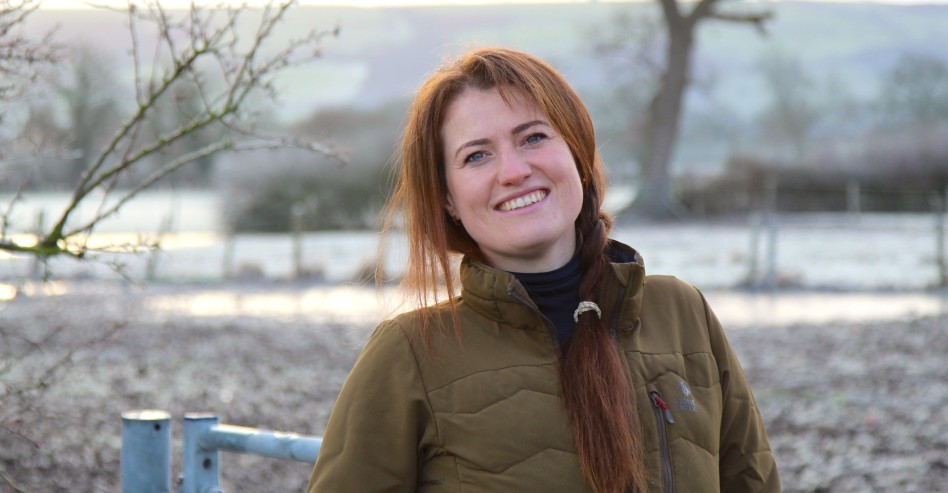
Lucy Eyre is transforming a council farm, once an intensive dairy operation, into a farm inspired by nature.

Eyre Farms is currently based on a 125-acre council farm near Welshpool in mid-Wales. It’s run by tenant farmer Lucy Eyre, whose journey to become a new entrant in farming has taken her up and down the country in search of land suitable for her nature-friendly approach.

Born in London, Lucy spent her childhood in the small town of Holmfirth in the Pennines. Although she enjoyed the outdoors, she never thought it would lead to a career in farming. “I thought you had to be already in the industry, and it was farmers’ sons and the odd daughter who became farmers,” she explained.

Instead, Lucy pursued veterinary studies in Liverpool before taking a job in Dundee, Scotland. Her farm work there, coupled with living on a pasture-fed dairy farm, inspired her to take on a few lambs. What began with a polytunnel in her garden and small plots under grazing agreement quickly expanded into a flock of hundreds of breeding ewes and male dairy calves - added because she was uncomfortable with them being routinely culled. In 2020, her main rental agreement was abruptly withdrawn, prompting a frantic, nationwide search for new tenancies, which ultimately brought her to Powys.

The council farm had previously been an intensive dairy operation - far from Lucy’s vision of a farming system in harmony with nature. However, she could see its potential, particularly in the mature oak trees lining the boundary. “The fields were regularly sprayed and fertilised, the hedges had all been flailed to within an inch of their lives and there were basically no fences,” she recalls. “Nevertheless, I felt I could really improve it and nurture its natural capital.”
Lucy immediately set about making drastic changes. She stopped all chemical use and divided the farm into blocks for a rotational grazing system, allowing the grass regular rest periods. Using old maps, she began restoring hedgerows across the farm, and within five years had successfully brought back all but one hedge line. 

“The most important thing was not losing my nerve,” she says. “At first, I often wondered if I had made the right choice coming here. You have to do a lot of waiting and reassure yourself that the changes you want will come. You certainly won’t get everything right the first time.”

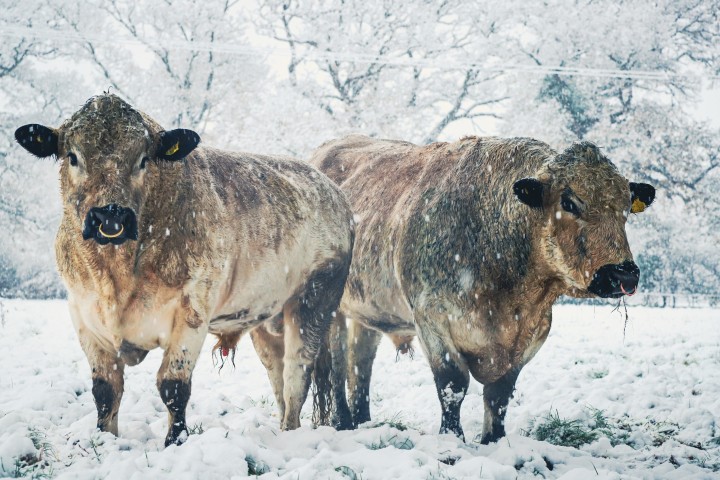
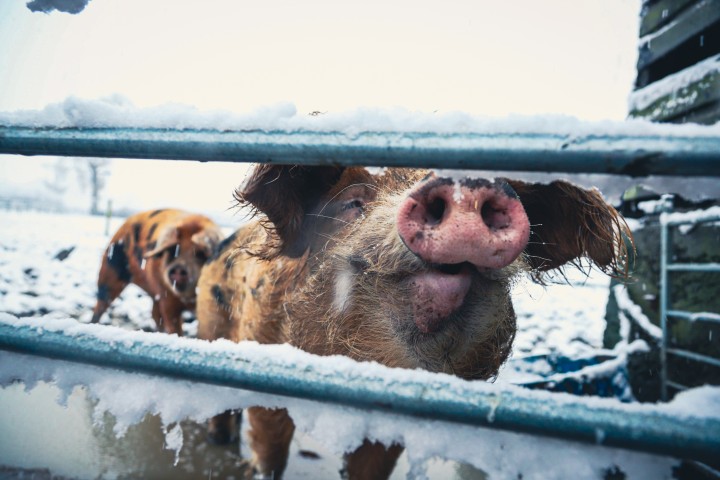
Eyre Farms now uses native breeds to produce meat. Lucy keeps around 100 Lleyn ewes, 33 head of British White and Jersey cattle - including followers and young stock - and six breeding Oxford Sandy and Black sows. The pigs were used to break up compacted soil in the woodland and fields, particularly in areas affected by overgrazing and ring feeders. The cattle are moved daily, while the sheep are rotated on a weekly basis. Areas that remain scrubby after the livestock have moved on are left for Lucy’s three ponies to forage.

The cattle are housed over winter, from early November until March or April, depending on how dry the ground is. The sheep are indoors for around two months, while the pigs have an open-sided shed, giving them permanent access to both pasture and hard standing.  The farm produces its own silage and hay, with the only external inputs being straw and pig feed.

If you want to understand a problem, just go and watch it for a while and it will become clear. As farmers, we’re often rushing onto the next job, but sometimes it’s worth taking five minutes with a coffee to just go and look at your land.

Lucy Eyre

In recent years, Lucy has sought to find a balance on the farm by reducing sheep numbers and increasing the presence of cattle. “I think if we can get to between 30 and 40 breeding cows, that will work quite well for this farm,” she says. “I wanted the scope not to put too much pressure on the land and give it a chance to recover from the more intensive farming of the past.”

When developing her grazing system, Lucy has favoured an intuitive approach rather than a rigid one. She encourages farmers to attune themselves to their land. “I feel it’s important to be present with your farm as much as you can. Whether it’s grass or cows, if you want to understand a problem, just go and watch it for a while and it will become clear. As farmers, we’re often rushing onto the next job, but sometimes it’s worth taking five minutes with a coffee to just go and look at your land and see what you’ve got.”

Introducing rotational grazing has helped improve soil health, an important consideration for a low-lying farm vulnerable to flooding from the nearby Severn and Vyrnwy rivers. So far, Lucy has relied on dormant seed banks to regenerate naturally, but she is keen to sow seed mixes to increase sward diversity.

The very hot, dry summer of 2025 also highlighted the need to make pastures more resilient. “You can’t just rest on your laurels and expect the grass to keep growing. Letting the grass grow longer paid off by keeping moisture in the soil and providing shade, but at times it still looked like the animals were eating standing hay,” she explains.

In Scotland, Lucy had an established network for direct sales, supplying London restaurants among other clients. Moving to Wales has brought new challenges for marketing and selling Eyre Farms’ produce, but rebuilding her direct sales operation is a priority. “It’s a lot of work, and a lot can go wrong, but it’s a way to get paid for all the extra things we’re doing for the farm,” she says.

Her nature-focused approach, including deadwood piles and longer verges, is already paying off for biodiversity. In 2024, she saw a curlew on the farm for the first time, and she hopes the long-billed waders will breed on site in future.

She is also working to increase the diversity of her hedgerows by planting more hazel, which will benefit species such as dormice, and to enhance the biodiversity of her grassland habitats in a project run collaboratively by the Montgomeryshire Wildlife Trust and the NFFN. Having recently hosted her first hedgelaying course, she is keen to hold more events on the farm where people can learn about nature-friendly farming or traditional rural crafts.

The council has taken an arm’s-length approach to the drastic changes on its farmland, which Lucy sees as both positive and negative. “Being left to get on with what I want to do and having a pragmatic landlord is a good thing, but I also think the council could have a really big impact locally on the environment with the right resources,” she says.

Lucy hopes her work in Wales can serve as a pilot for other new entrants and tenant farmers. “I’d like to use this place to show that the practices I’m using aren’t costing the earth and can make you more efficient, perhaps even a bit more productive,” she explains. “I feel that nature-friendly farming takes the pressure off both the farmer and the farm."

Cookie consent

We use cookies on this website to improve your experience, provide social media features, and analyse our traffic. By clicking Accept All, you agree to the use of cookies as outlined in our Cookie & Privacy Policy. You can manage your cookie preferences at any time by clicking Cookie Settings.