
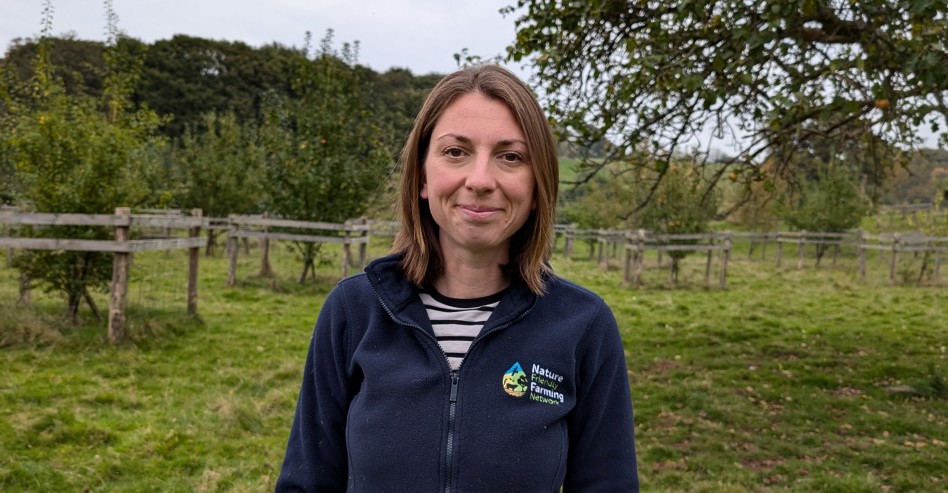
On the edge of Exmoor, NFFN England steering group member Holly Purdey is guiding a National Trust farm through a nature-friendly transformation, striving to remain financially viable while managing the land for livestock and biodiversity.
Horner Farm, with its 200 acres of pasture, occupies one of the few lowland areas on Exmoor in Somerset. Owned by the National Trust, it is currently transitioning to a nature-friendly approach under the stewardship of tenant farmer and NFFN England steering group member Holly Purdey.
Holly grew up on a Somerset organic dairy farm, where animal welfare and environmental responsibility were central values. With five siblings, she wasn’t sure if her future lay in farming and instead channelled her love of the outdoors into a career in conservation. The death of her father when she was 19 prompted her to study wildlife conservation locally, keeping her connected to the countryside and farming.
She then worked for the Somerset Wildlife Trust, where she is now a trustee, and the National Trust. While working on one of the charity’s farms, she rediscovered her passion for agriculture.
“I felt there was this push against farmers, that they weren’t doing a good enough job,” she recalls. “I felt conservationists were often critical without fully understanding the pressures of farming. I thought it was possible to farm in balance with nature, and that has been a driving force for me.”
Holly returned to her mother’s farm and began rearing sheep before she and husband Mark took on the tenancy of Horner Farm in 2018. When they moved in, the farm was far from a nature-friendly paradise.
“It was in a really poor state,” Holly recalls. “It had been overgrazed with horses, soil organic matter was very low, a lot of topsoil had been lost through arable farming and flooding, and there were thistles everywhere, along with compaction and water runoff.”
Holly was able to make immediate changes by entering the higher tier of Countryside Stewardship, which allowed her to establish herbal leys, wood pasture and orchards. She was clear from the outset that she wanted to eliminate inputs straight away rather than reduce them gradually.
“We wanted to farm our way from the beginning,” she says. “We were told we needed to apply lime, spray the fields and so on, but we said it didn’t fit with our principles, so we weren’t going to do it. Land can become addicted to fertiliser, and then it goes into a shocked state when that’s removed. Because we had really low livestock numbers, the land could rest and recover. It gave us breathing space.”
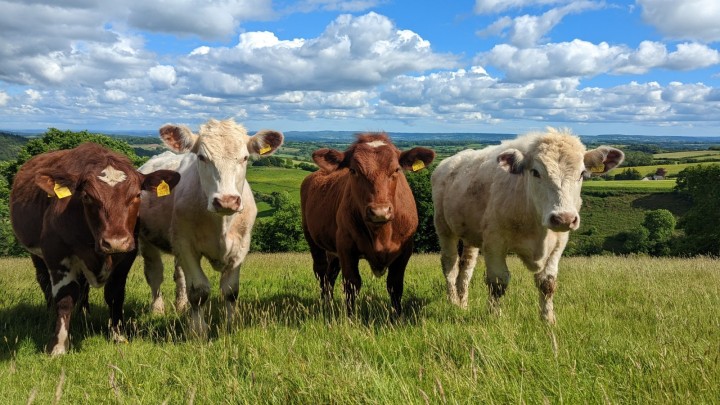
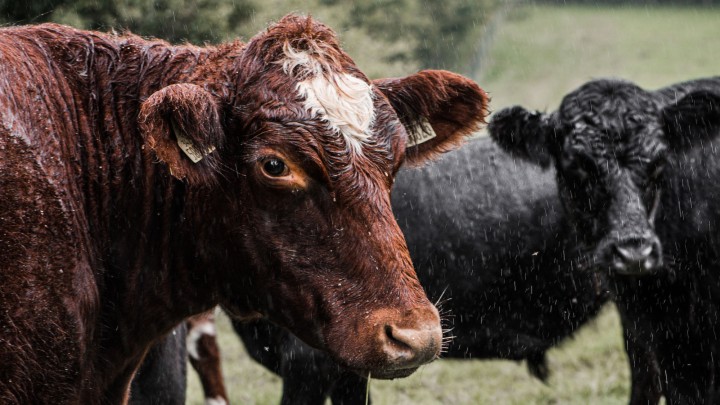
By getting to know the land, Holly has been able to set the correct stocking levels for the farm’s grazing system. At present, the farm carries around 100 ewes - mostly North Country Cheviots with some Badger Faced Welsh Mountains - along with about 45 Shorthorn cattle and roughly 30 pasture-fed poultry hens.