
Farmer Stories

Clare Hill - A 100-year vision for a Shropshire farm

England
Case Study
agroforestry
Cattle
direct selling
Farm planning
Low-input farming
Poultry
rotational grazing
regenerative farming

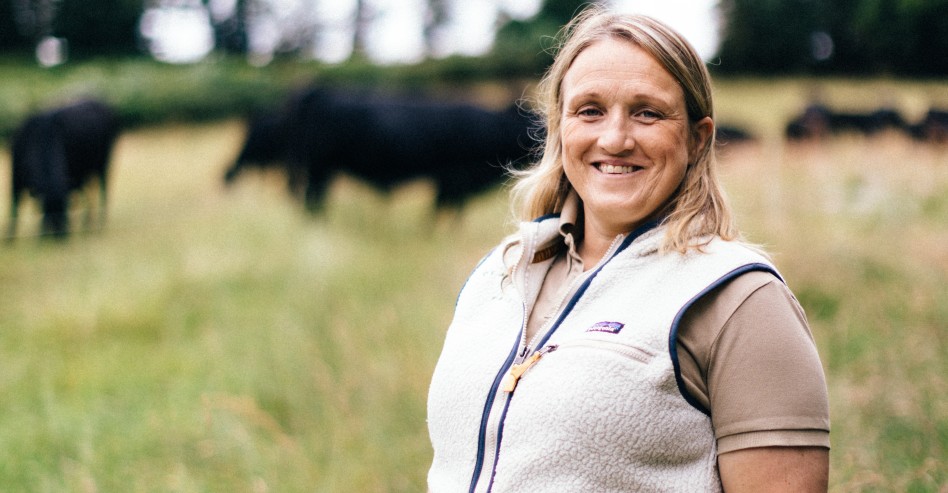
At Planton Farm, Clare Hill is putting her ideas about regenerative agriculture, resilience and the future of food into practice. 

Planton Farm occupies 80 acres of a South Shropshire hillside, a couple of fields below Clee Hill Common. Since 2022, it has been home to Clare Hill, who is using the farm to put her long-nurtured ideas about regenerative agriculture and a truly nature-friendly food system into practice.

Clare was born in Lincolnshire into a family with long links to agriculture, and both her parents worked on farms. Preferring practical work to academic study, Clare started working with horses as a groom before taking courses in environmental and countryside management. A module on agriculture during her national diploma rekindled her interest in farming, and she spent a year gaining experience in Australia before studying at Harper Adams.

Clare then embarked on a career in the food industry, including stints with the Red Tractor accreditation scheme and a major supermarket. She went on to join FAI Farms, a consultancy specialising in sustainability and food systems, working on farmer relationships with major retailers and food companies, before taking on the management of the organisation’s 1,200-acre farm, owned by Oxford University. It was there her interest in regenerative agriculture began to take shape.

“The farm was on a floodplain and getting harder to farm,” Clare recalls.  “It had gone from flooding once every 10 years to multiple floods each winter, then a fortnight later we’d been lambing with huge cracks in the ground because it was so dry. It had been organic for a long time, but something was still missing. I realised we needed a focus on regeneration, not just organic production.”

Clare secured funding to research adaptive multi-paddock grazing and how it linked to deep roots and water retention. Soon, though, she wanted to take her new discoveries much further and, with the help of philanthropic funding, she moved to Planton. 
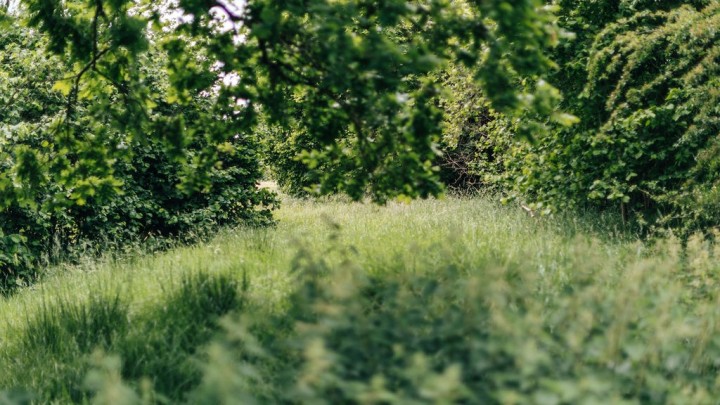
When she arrived, the land had been used solely for grazing horses for a few years, following a period of set-stocked sheep farming. Clare recognised a combination of issues, with overgrazing in some areas alongside land that had been spared intensive working with machinery for some time.

“Some of the farm had high nutrient loads in shaded areas and very little rest, but there were also patches of bracken the sheep wouldn’t venture into, diverse scrub with self-seeded trees and some really nice wilder areas,” Clare remembers. “Our neighbours expected us to rip them all out and were a bit shocked when I said we were going to put them in Countryside Stewardship and get paid to leave them as they were.”

Clare knew immediately that the CS agri-environment scheme would provide vital financial support for her vision and put 30 acres of the farm into wood pasture restoration. More than 100 trees were planted with cactus guards to allow grazing, with three hawthorns around the base to provide natural scrub as they grew. Hedge species were also planted in clumps.  “We wanted to recreate that mosaic habitat of trees, grassland and scrub areas,” Clare says.

Having done holistic management training, Clare’s next step was to look far into Planton’s future, providing a long-term context for everything she would go on to do.  “I envisioned a 100-year plan for what we wanted the farm to look like,” she says. “It needed to be self-sustaining, not suffering from floods or drought and able to provide the animals with all their nutrition and minerals. It also needed to not depend on subsidies and to provide a family living here with an income and a lifestyle that wasn’t all-consuming, so they could spend time together apart from the farming work.”

We sit down each autumn and do a grazing plan for the whole of the next year. I’ve already decided where we’re going to calve next year, and that field is already resting.

Clare Hill

With Planton being entirely grassland, Clare was clear that ruminants would be needed, but that they wouldn’t bring in enough profit alone from 80 acres. After experimenting with pigs, the farm now has cattle and chickens.  Planton has a single herd of 21 pedigree Angus cattle, which enables natural herd dynamics and natural weaning. Clare’s planned holistic grazing system moves them around the farm, but with a high level of long-term planning.

“We sit down each autumn and do a grazing plan for the whole of the next year,” Clare says. “I’ve already decided where we’re going to calve next year, and that field is already resting. It’s the same for the first three or four months the cows are outside next year. People tell me there’s no point planning so far ahead because you can’t predict the weather, but for me it’s the opposite: we know the weather is going to change, so you have to plan ahead.”

Clare says Planton is still “in recovery” just a few years into this grazing system, but she is working towards outwintering her cattle. Bale grazing keeps them out from mid-October until around Christmas and New Year, before they are housed for a few months. “The land’s water-holding capacity is really improving already, but the bits that could hold the cattle are right across the farm, and driving vehicles across it when it’s raining persistently in February and March would damage the land,” Clare says.

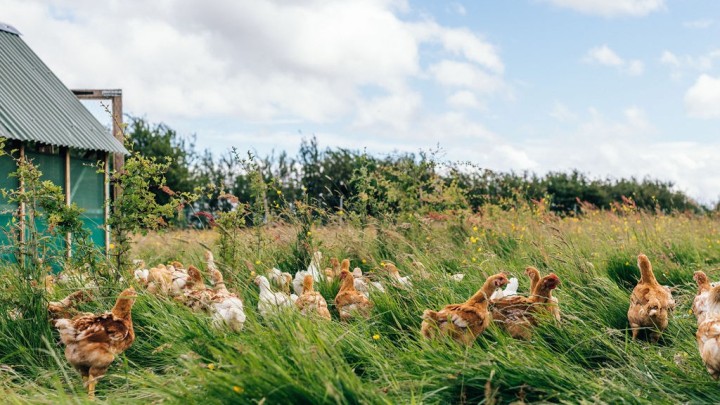
Chickens are the other important part of Planton’s farming system. Not only do the birds provide an income, they are also the heart of the farm’s research work, for which Clare teams up with food systems researcher Dr Annie Rayner, who came on board the year after Clare moved to Planton. The farm has sold both organic eggs and meat, but is currently concentrating on chicken meat, running trials to find ideal dual-purpose birds that will work in nature-friendly and regenerative farming.

“The genetics in chickens focus on a global industrial system, with laying hens mostly in cages and meat chickens in sheds of 40,000 birds or more, with no access to the outdoors. That means they don’t select for foraging ability or anything else that a pasture-based or regenerative farmer would need,” Clare says. “We’ve taken production to the extremes, so we’re looking for something more in the middle that will produce a good number of eggs and a decent carcass. We’re also looking for true resilience in birds, because there are health and welfare problems when maximising production is your only metric.”

The chickens are kept in a mixture of sheds, polytunnels and a pen adapted from a design by American regenerative agriculture pioneer Joel Salatin. They are moved every day, sometimes following the cattle and at other times spending time in a one-acre forest garden planted in March 2024 with around 300 trees of 70 varieties. This provides the birds with forage from leaves, berries and nuts as well as shade. These parent trees will also be used for propagation, ensuring Planton has enough trees for its own agroforestry plans while providing an income from supplying trees to other farmers in the future.

Planton’s meat is sold through a mix of direct selling and organic box schemes, with visits to farmers’ markets too. There is also an orchard with apples, plums, damsons, pears and cherries, which Clare hopes to turn into another income stream when the fruit trees mature in a few years.

It’s hard to accept the need for change, for example prioritising nature-friendly farming over neat-looking farming. You need the strength and confidence that what you’re doing is right to calm the naysayers around you and manage those relationships.

Clare Hill

Alongside farming, Clare co-runs Roots to Regeneration with Cumbrian regenerative agriculture trainer Caroline Grindrod. The programme supports farmers and food system workers going through a deep transition to regen ag, with its fourth cohort starting in March 2027.  

Clare says it’s not just the practical elements of the agricultural transition that people often need help with, but the social and cultural ones too. “When I started, I didn’t even have the language to explain what I wanted to do,” Clare says. “Now I do, and I can explain about the importance of the water cycle and why letting grass grow long would help. 

“It’s hard to accept the need for change, for example prioritising nature-friendly farming over neat-looking farming. You need the strength and confidence that what you’re doing is right to calm the naysayers around you and manage those relationships.”

Thanks to Clare’s century-long envisioning exercise, the future for Planton is fairly well mapped out, with the chicken research project and developing the tree side of the business the current priorities. For Clare, the two have common roots. “Time and time again I see problems in the food system due to the dominance of annual crops,” she says. “For us, both these things are about perennial food. I think more perennial crops in our food system will take us much further into resilience.”

Cookie consent

We use cookies on this website to improve your experience, provide social media features, and analyse our traffic. By clicking Accept All, you agree to the use of cookies as outlined in our Cookie & Privacy Policy. You can manage your cookie preferences at any time by clicking Cookie Settings.