
Farmer Stories

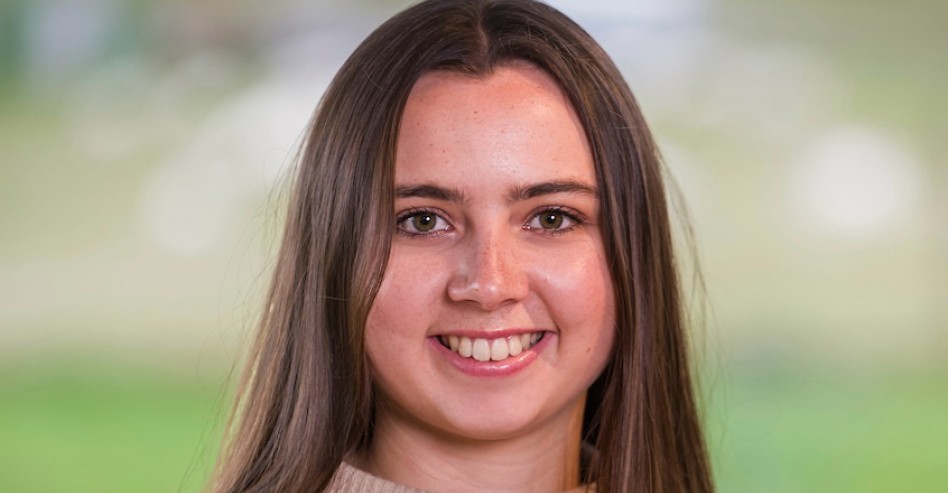
Anna Wylie - A fifth-generation farmer on a mixed farm in Fife

Scotland
Case Study
Cattle
Breeding
Crops
Farm planning
Diversification
Mixed
agroforestry
Resillience

NFFN Scotland steering group member Anna is finding ways to bring about positive change on her family’s arable and beef farm.

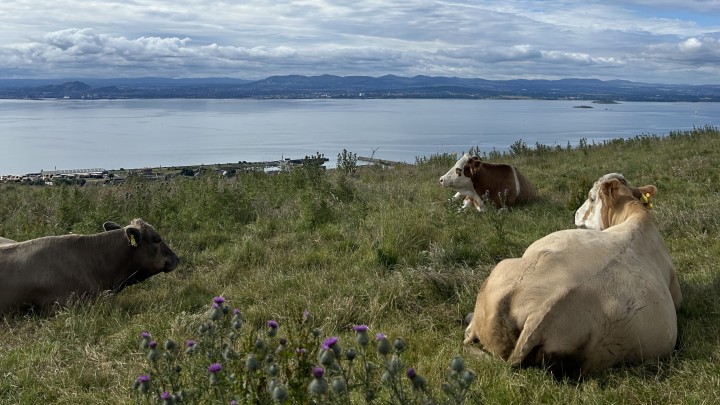
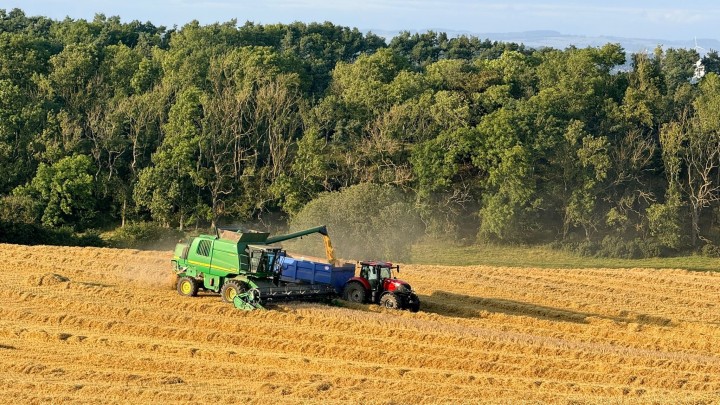
Longloch Farm is a large mixed arable and livestock operation covering 1,200 acres of hilly Fife ground outside the town of Burntisland. It produces beef and crops for both people and animals, and the family that runs it includes Anna Wylie, a member of the NFFN Scotland steering group.

Anna is a fifth-generation farmer on her dad’s side, while her mum also has farming roots. Following the tragic loss of her dad in a farming accident when Anna was 16, her mum took on the responsibility of running the farm. Today, it remains a family enterprise, run by her mum with the support of a farm manager and the active involvement of Anna and her sister.

Anna studied law at university, balancing her academic commitments with responsibilities on the farm. After graduating in 2021, she received a scholarship to complete a Master’s degree, which took her to Glasgow, Barcelona and Germany, before she moved to Brussels to work for a technology law firm. Keen to take on a more active role in the farm, she returned home at the start of 2024, eager to find ways to apply the ideas she had gained through her studies and travel.
“I’ve always felt that having an understanding of the law is incredibly valuable when running any business, including a farm,” Anna explains. “I also believe law plays a critical role in shaping our food system. From international trade and food safety standards to public procurement and food advertising, legal frameworks influence almost every aspect of how we produce, distribute and consume food. During my Master’s, I became particularly interested in food and water security, and how fundamental they are to international peace, security and development. We often think about food insecurity as a consequence of conflict and instability, but it can also be one of the underlying factors driving them.”

Environmental considerations have always been important to Anna’s family, and their approach to farming has been about finding a balance between their ideals and running a successful business. Land use at Longloch is split roughly 50-50 between arable and livestock farming. The arable rotation includes spring barley, winter barley, winter wheat, spring beans and grass, with crops such as oats and oilseed rape currently out of the rotation. The beans are grown for cattle, allowing the farm to be soya-free, while the grains are used for livestock feed, milling seed and whisky. Cover cropping and wildflower strips are used, alongside regular soil sampling to support a targeted approach to reducing input use.

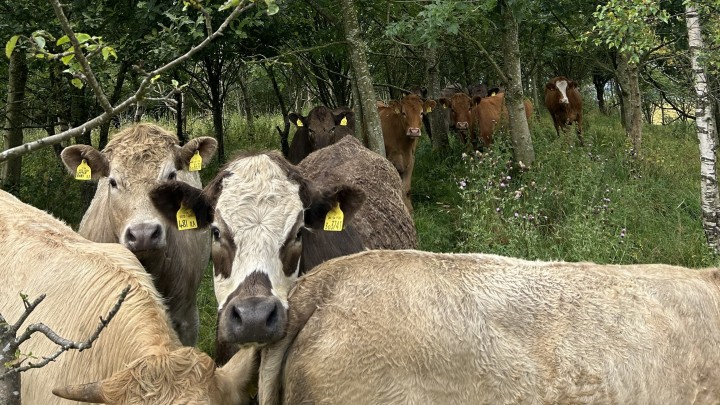
On the livestock side, Longloch has a suckler herd of between 160 and 180 animals, made up of Herefords, Whitebred Shorthorns and Angus cattle, alongside some continental breeds such as Charolais and Simmental. Over the past five years, particular emphasis has been placed on improving the herd’s genetics. This has resulted in fewer calving complications and minimal need for intervention, improving efficiency and animal welfare while making livestock handling safer for everyone working on the farm.

In recent years, the farm has also introduced more native-breed bulls to develop a hardier herd. The animals are split into groups of around 30 and allocated fields or grazing areas divided into two sections, allowing them to be moved between them and giving the grass time to recover.

Currently, some of the cows come inside in late autumn for the winter, while a couple of groups can remain outdoors until around January. “We’ve been trying to extend our grazing season but the weather has just gone from one extreme to the other, from the wettest year I’ve ever seen to bone dry the following year,” Anna says. Her long-term ambition is to extend the farm’s grazing season, with the possibility of keeping the cattle outdoors until calving. However, many of the farm’s arable fields currently lack fencing and suitable water infrastructure, and limited funding opportunities make expanding outwintering a significant investment.

Below-average rainfall across Fife during the spring and summer of 2026 has also got Anna thinking about things that have never been an issue before. “We’ve been making investments to improve our water systems,” she says. “The last few years have completely changed things; water availability has been a serious concern. Unfortunately, I think that’s the way it’s going to remain going forward.”

We've been making investments to improve our water systems. The last few years have completely changed things; water availability has been a serious concern.

Anna Wylie

Agroforestry is another area Anna would like to develop. The farm has pockets of trees, including some ancient woodland, dotted across the land, with much of it managed either for shelter or nature. Anna is keen to expand woodland cover across the farm, creating more spaces where cattle can seek shade and shelter, express natural behaviours and interact with their environment. “One of my favourite things to see on the farm is the cows using the landscape depending on the weather,” she says. Although plans have been drawn up for further woodland creation, delays in securing financial support have prevented the project from progressing.

Anna has also been keen to define her role on the farm by getting involved in rural leadership programmes, research projects and trials exploring potential opportunities for diversification. She became involved in the Nitrogen Climate Smart (NCS) project, which looks at improving efficiency in bean growing and reducing carbon emissions. As part of this work, trials were carried out using a bio-stimulant and a post-emergent spray, alongside comparisons between cereal crops.

Anna hopes to be growing pulses for human consumption within the next couple of years, but the route to market needs to be made easier first. “There’s such a lot of interest in eating beans right now and there are campaigns to get more pulses in our diet,” she says. “It would be great to have a project here in Scotland supporting farmers to supply local markets and get these foods onto local plates, perhaps through public procurement and working with councils.”

Anna is also involved in the Climate Farm Demo project, which aims to build a pan-European network of farmers working practically to tackle climate change. Through the project, carbon audits have been carried out at Longloch, and there are plans for a knowledge-sharing event in 2027. Anna has also become involved in Scottish Agritourism, with plans to diversify the farm by renovating two cottages on the site to provide holiday accommodation. “It will be an extra income stream for the farm, and there’s a great network in agritourism which gives me so many new ideas,” Anna says.

Anna has also been leading the UK Youth Food and Farming Forum, which emerged from an NFFN collaboration called Back the Future, for which she was an ambassador. Now with more than 100 members, the Forum and its 13 partner organisations give young people opportunities to experience everything from hosting politicians on-farm and speaking at events such as the Royal Highland Show to writing for trade publications like The Grocer.

For Anna, hearing a diversity of young people’s voices has helped shape her thinking about a positive future for farming. “We need to recognise that there are vast differences of opinion within our sector, and we need to learn to work together rather than putting ourselves in silos,” Anna says. “We’ve got to be able to work with each other, especially when our visions of the future aren’t the same, if we want to make positive changes.”

Cookie consent

We use cookies on this website to improve your experience, provide social media features, and analyse our traffic. By clicking Accept All, you agree to the use of cookies as outlined in our Cookie & Privacy Policy. You can manage your cookie preferences at any time by clicking Cookie Settings.