
Farmer Stories

Amy Chapple - Pasture-raised poultry and pigs in Devon

England
Case Study
direct selling
Livestock
native breeds
Pigs
Poultry
rotational grazing
soil health
Low-input farming

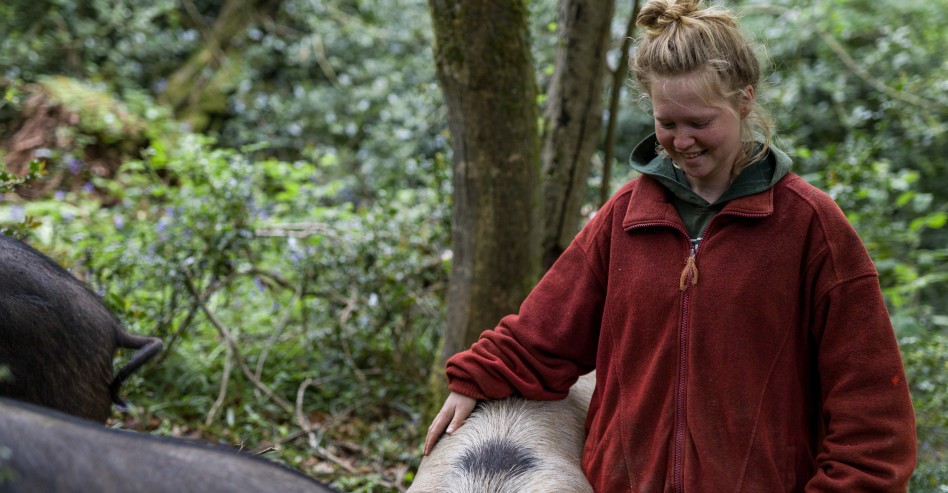
Photo credit: Katie Chapple Photography

At Redwoods Farm, an NFFN farmer is putting her passion for nature-friendly farming into action alongside her parents.

Redwoods Farm, in the heart of rural Devon, is an example of the county’s classic farming landscape: rolling hills, small fields surrounded by hedgerows and lots of trees. Its 150 acres are home to cattle, sheep, chickens and pigs, all reared in nature-friendly ways, with NFFN England steering group member Amy Chapple farming 25 acres of Redwoods and rented land.

Farming runs in the Chapple family, with her dad returning to the industry after being inspired by time spent on his grandparents’ farm during his childhood. Amy was five when the family moved to Redwoods, and quickly realised farming was also what she wanted to do. “I was always out there feeding cows or helping with lambs,” she recalls. “Everything I could do, I would get involved with.”

After completing her A-levels, Amy took up an internship at the farm that runs the Groundswell festival, but a rugby injury forced her to cut it short by several months. Nevertheless, the regenerative approach there made a big impression. “My dad had started experimenting with mob grazing when I was in college, but I got thrown in at the deep end during the internship,” she says. “It was the start of nature-friendly farming becoming a real priority for me.”

Soon after Amy returned to Devon, Covid-19 and the lockdowns hit. However, far from putting the brakes on Amy’s burgeoning farming career, it provided the opportunity to kickstart it.  “My parents said the farm wasn’t big enough to support me as well,” she says. “Being at home during lockdown gave me the chance to create a business plan that wasn’t going to need much land.”
Amy had done holistic management training with the Allan Savory Institute while on her internship, which got her thinking about how those principles could be applied to the pigs she already had. She then rented a two-and-a-half acre field from her parents, before gradually expanding her operations. . Her pigs and hens now cover around 25 acres, with her hens also moving around the rest of the farm.

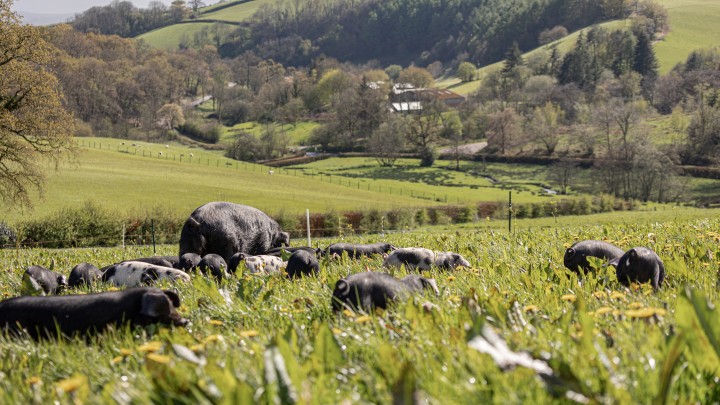
Amy finishes around 200 pigs a year, which are a traditional mix of native breeds, including Gloucester Old Spots, Large Blacks and Saddlebacks. Their fields are mostly split into eight paddocks with a rotational grazing system, which means the pigs move every seven to 14 days. Their grazing of fields and rushy marginal areas turns over the soil, allowing grasses and other plants to establish, while also helping prepare the ground for herbal leys, bird seed mixes and cover crops ahead of the next grazing cycle.

Amy prefers her pigs to follow her three Belted Galloway cattle to promote interspecies grazing, as the pigs can then eat the fly larvae in the cow dung. She is also improving the nature-friendly credentials of her inputs, and from the 2026 harvest will buy 50% of her feed from a local farm in organic conversion.

Amy is currently trying to reduce the winter housing period to three months. She has previously outwintered her pigs on arable farms and would like to do so again as she believes it would be mutually beneficial. “I think pigs grazing on arable cover crops would be even more beneficial than sheep. Pigs need feed, so they put even more nutrients into the soil, in addition to reducing the need for ploughing through their digging,” she says.

I think pigs grazing on arable cover crops would be even more beneficial than sheep. Pigs need feed, so they put even more nutrients into the soil, in addition to reducing the need for ploughing through their digging.

Amy Chapple

The other half of Amy’s farming is a pasture-based eggs enterprise. She has kept hens since she was a teenager, buying her first birds for a school project to make a profit from a £10 investment. Now her laying hens have to share space with her dad’s pasture-raised meat birds. “His chickens are in polytunnels in the biggest fields, because the chickens put down a lot of dung and the land needs long rest periods, so my hens have to fit into the more marginal areas,” she says.

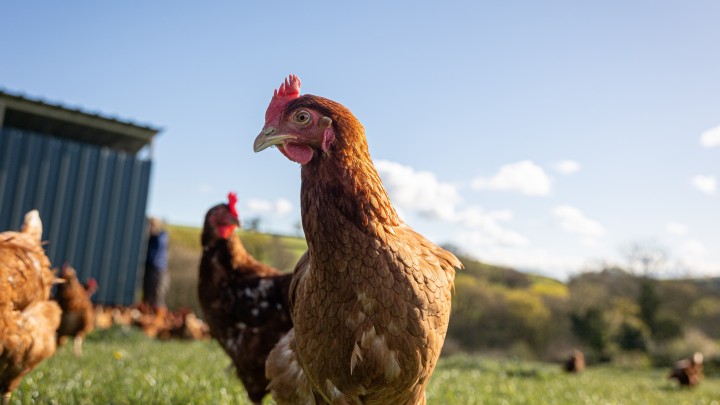
Amy’s 550 laying hens are divided into trailers housing around 200 birds each. They are given access to netted-off areas of pasture, rotating around a field before moving on to the next one.  Amy moves her hens twice a week, each area being at least the minimum required for standard free-range systems. “Sometimes they are following the cows, which means they can scratch around in the dung and eat larvae, and at other times they are in long grass where they can eat a nutritious diet of foraged insects and plants at different stages of growth,” she says.

Amy has just hatched some Rhode Island Red chicks, which she intends to keep for breeding and hatching their own eggs. She is also intensely interested in animal genetics and selectively breeds her pigs to ensure they are well suited to life in a nature-friendly, low-input system.  The farm is pesticide- and fertiliser-free, and trees that are beneficial to both livestock and nature have been planted. There are also plans for hedgerow planting and further increasing tree cover.

The farm’s approach is paying off for biodiversity. “Yellowhammers absolutely love it in the pig fields, and the birds of prey hunt there more than anywhere else,” Amy says. “The pigs create this tussocky grass and tufts in the pasture, which are home to so many mice.”

To protect the hens and lambs from foxes, Amy also has a Maremma, a livestock guardian dog from Italy initially bred to prevent wolf attacks. “You need predators for a healthy ecosystem, and there are plenty of rabbits and other prey animals around, so having a guardian dog means we can live alongside the foxes without our livestock being bothered,” Amy says.

Amy sells her produce through a combination of online retail, farm shops, restaurants and farmers’ markets with the family farm’s produce. Amy also plans to transform a small shed at the end of the drive into a small farm shop and create an on-site butchery. “I would like to do my bit to rebuild the connection between people, food, farming and nature,” she says.

Increasing resilience to changing weather and climate is also at the forefront of Amy’s thinking for the future. The very wet winter of 2025-26, which saw record rainfall and widespread flooding across Devon, meant some of her pigs had to be housed indoors for five months, something she is keen not to repeat. “If you damage your soil, it will remain damaged for years,” she says. “If the pigs stay in an area for too long, the rotation will not be as effective because the pasture won’t have grown enough when they return to that paddock, and the pigs could then damage the soil. There are so many knock-on effects from the way you do things.”

Amy is also looking to increase the amount of land she rents without significantly increasing her stock numbers, which would give her more of a capacity buffer. She’s also interested in bringing more types of livestock to the farm. “I’d like to see how we can create more and different types of habitat on the farm,” she says. “You’ve got to test different things to know what’s really worth doing.”

Cookie consent

We use cookies on this website to improve your experience, provide social media features, and analyse our traffic. By clicking Accept All, you agree to the use of cookies as outlined in our Cookie & Privacy Policy. You can manage your cookie preferences at any time by clicking Cookie Settings.